Willets Point Commons Lottery Closes After Deluge of Applicants, Queens Awaits Next Phase
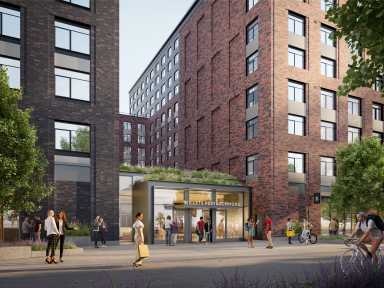
An unprecedented rush for Willets Point Commons flats exposes the yawning gap between affordable housing supply and demand in New York’s fastest-changing neighbourhood.
New Yorkers are not known to line up without reason, so the spectacle of thousands clamouring for a shot at one of 880 flats in Queens, near the muddy sliver between 126th Street and Roosevelt Avenue, was telling. Last week, the housing lottery for Willets Point Commons closed after the city declared “overwhelming demand.” By any metric, it was less a launch than an unambiguous cry for help from the city’s rent-burdened millions.
The chords of this story are simple. Willets Point Commons, the first phase of a sprawling redevelopment beside Citi Field (where the Mets dream of competence) offers 880 “permanently affordable” apartments. These are part of a project intertwining housing, a new soccer stadium for New York City FC, public open space, and eventually a new school and hotel. Never mind amenities or grandeur; what matters is that half of these units were affordable for families making no more than 120% of the area median income—and 219 were earmarked for those below 60% of it.
The numbers are stark. Studios started at $486 per month for single applicants with incomes as low as $20,469; the priciest three-bedroom flats topped out at $4,244 for large households with incomes well into the low six digits. While affordable is a relative term in this city (median rents in Manhattan hover around $4,300 per month, according to StreetEasy), the Willets Point units will seem like a pleasant hallucination for most families straining to meet landlords’ litmus tests.
Demand was, as officials delicately put it, “overwhelming”—no precise applicant tally, but experience from similar lotteries (such as Essex Crossing or Hunters Point South) suggests applications exceeding available stock by fifty- or hundred-fold. The city’s top housing officials, flushed with rare optimism, cast the moment as “transformational.” Dina Levy of the Department of Housing Preservation and Development called it “the kind of bold development we need to embrace.” In this context, bold means simply building in a city that once trundled along at a snail’s pace.
Willets Point, infamous for decades as an industrial wasteland—think unpaved roads, derelict auto shops, and stagnant puddles—has quickly become a testbed for what some hope is the next chapter in outer-borough urbanism. The area’s reinvention hinges on multi-faceted investments: not only flats, but open lawns, a football ground holding 25,000, and planned public services. City boosters reckon the transformation will make Willets the city’s fastest-growing enclave.
For residents, however, the process resembles a high-stakes scramble. The mere existence of such a lottery—much less the surge of interest—suggests economic pressures that are now hardwired into the city’s operating system. Nearly half of city renters devote over 30% of pre-tax income to rent, and a quarter spend more than half, by recent census reckoning. The tepid pace of affordable housing construction has been the chief culprit, stymied by cost, regulation and parochial opposition.
For New York’s economy and politics, the implications are sobering. The Commons’ popularity highlights the city’s Achilles’ heel: an acute supply-demand mismatch that shows little sign of abating. Politicians touting small housing allotments (whether Mayor Eric Adams or the borough potentates) appear to celebrate benign neglect—every ribbon cut is dwarfed by waiting lists as long as the 7 train. For those who secure a foothold through the lottery, there is newfound stability. For the thousands left out, disappointment breeds cynicism about the capacity of public policy to solve everyday problems.
Beyond housing, the neighbourhood’s remaking is cast—rightly or not—as a motor of wider economic dynamism. Proponents brandish the “economic multiplier” effects: jobs in construction and stadium operations, customers for the local stores, a possible trickle-down to secondary services from cafés to barber shops. Yet history gives cause for wry scepticism. Large-scale “transformational” urban projects are often attended by displacement and rising costs after the photo ops fade, more so when sports franchises enter the fray and reorient priorities from residents toward spectators and tourists.
Cities beyond New York grapple with analogous crises of affordability and ambition
Willets Point’s lottery drama has obvious analogues in other high-cost cities—San Francisco, Toronto, London—where affordable housing is doled out by chance, not entitlement. Each property cycle reveals the limits of wielding lotteries as a fix for chronic shortages. Cities as disparate as Stockholm and Singapore conscript public intervention on a grander scale: mass social housing, clever public-private financing, or aggressive upzoning. New York’s experiment is modest by those standards, if ever so slightly less so in recent years.
The spectacle exposes a deeper failure to reform the city’s arcane land-use apparatus. Zoning battles and tradition-minded community boards have long exerted a gravitational drag on supply, often ensuring that such housing experiments are too rare, too slow, and too small. Mayors promise thousands of affordable units and then revel in the delivery of hundreds, as if addressing a deluge with a teaspoon.
We suspect the city administrators know as much. The “overwhelming” response to this one development bodes ill for attempts to declare mission accomplished. The city needs at least 500,000 new homes—affordable or otherwise—by 2030 merely to tread water, according to the Citizens Budget Commission. Projects like Willets Point Commons, while welcome, are a drop in a very large bucket.
Still, amid all the institutional inertia, there are signs of a grudging shift toward scale and ambition. If Willets Point succeeds as a model—mixed housing, public space, and robust transport links—it may nudge other boroughs toward emulation. The economics are tricky, but the logic is inexorable: a city worth living in must be one that builds.
For now, the Commons’ first wave of residents will soon unpack their boxes and scan the skyline above Flushing Bay, perhaps feeling lucky but also aware that their lottery win does not fix the structural malaise. For every family who gains, many more wait. In the mathematics of New York living, hope remains in far shorter supply than housing. ■
Based on reporting from QNS; additional analysis and context by Borough Brief.