Trump Declares Iran’s Supreme Leader Jamenei Dead After Joint US-Israel Strike, Tehran Faces Uncertainty
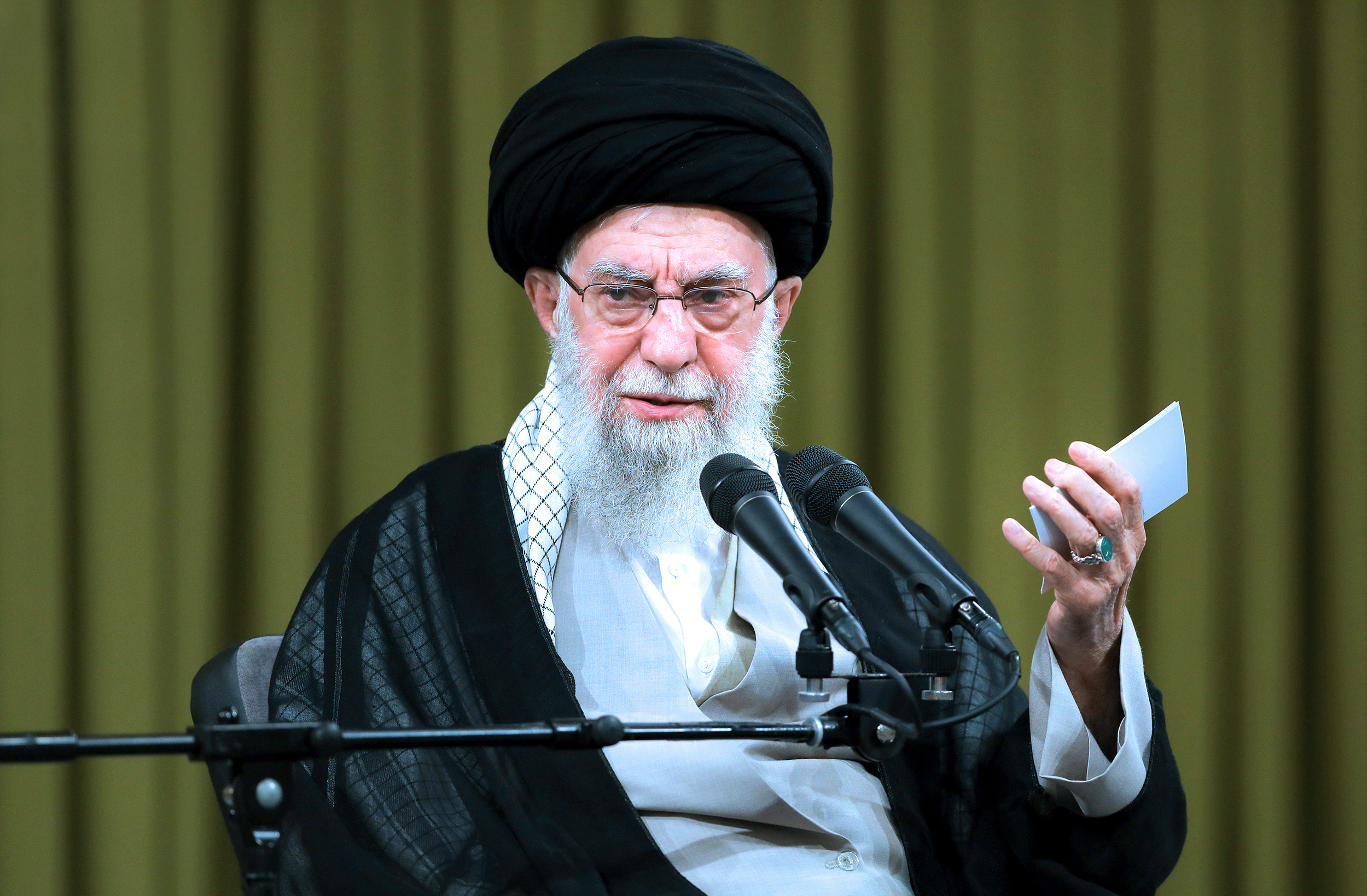
The death of Iran’s supreme leader in a US-Israeli strike sends tremors far beyond the Middle East—and portends unpredictable ripples across New York City, a global crossroads for diaspora politics, security, and commerce.
Few headlines prompt as many crossed wires in America’s multicultural metropole as the demise of a Middle Eastern autocrat. Yet when news broke that Ali Khamenei, Iran’s Supreme Leader since 1989, was killed in a joint US-Israeli attack—his fate reportedly sealed by American intelligence and technology—the aftermath quickly ricocheted through the five boroughs. President Donald Trump, triumphant on Truth Social, declared Khamenei “one of the most evil people in history,” extolling the strike as righteous retribution for Iranian abuses and exhorting Iran’s people to seize their nation’s destiny.
The killing of Khamenei, the indomitable turbaned patriarch who for 35 years brooked little dissent and stitched together Iran’s religious, military, and political sinews, marks an uncommonly muscular assertion of American—indeed, Western—might. His reign, punctuated by brutal crackdowns on students and protesters and defined by relentless anti-US and anti-Israeli rhetoric, turned Iran into both a regional bogeyman and a bastion for the “Axis of Resistance”.
For New Yorkers, the echoes reverberate more than might appear at first glance. The city is home to an Iranian diaspora both large and diverse—ranging from secular liberals in Midtown tech startups to devout Shi’ite worshippers in Queens’ bustling enclaves. News of the strike sent a flutter through WhatsApp groups and community centers alike, with some expressing hope for a more liberal future in Iran, others dreading instability and reprisals.
The NYPD, never one to dither after a geopolitical jolt, has already tightened its watch on sensitive sites. Task forces have been briefed about possible hate crimes or retaliatory action at synagogues, Iranian-run businesses, and critical infrastructure. The stakes are not simply theoretical: New York, perennial target and stage for global tensions, has learned to anticipate the unexpected—from lone-wolf terror plots to digital sabotage efforts traced to adversarial states.
The economic knock-on effects, though harder to predict, are likewise far from trivial. Wall Street’s bond traders slept fitfully as oil prices wobbled in the immediate aftermath, nervous of flare-ups in the Strait of Hormuz. The Port Authority braced for potential delays as new security advisories threatened to bog down cargo and air travel. Iranian-American entrepreneurs, freshly wary of surveillance and xenophobia, now face a climate less welcoming to cross-border business.
Second-order ripples reach deeper, gnawing at the city’s political and civic fabric. Progressive activists—some haunted by the memory of 2003’s Iraq war furor—debate whether the Khamenei strike constitutes overdue justice or reckless escalation. For New York’s Jewish community, present in both sympathy marches and counter-protests, the event recalls perennial anxieties over global antisemitism and the entanglement of local and foreign affairs.
Diplomatically, the move is loaded with intrigue. Even as Washington claims coordination with Israel, many in Turtle Bay’s UN corridors now ponder whether American impulsiveness undermines the possibility of a negotiated detente with a post-Khamenei Iran. Analysts note that for every strongman’s fall, there are as many scenarios of pro-Western opening as there are of successor autocracy or civil war—a cautionary tale writ large in the fizzle of Arab Spring hopes.
How global tremors reach the city’s door
America’s projection of force abroad rarely remains a distant tableau for New Yorkers. In the 1970s, waves of émigrés fleeing the Shah and then Khomeini’s Islamic revolution remade neighborhoods from Flushing to Great Neck. In more recent years, tense US-Iran standoffs and sanctions have choked off family remittances and forced hard decisions by dual citizens. The city’s cosmopolitan streak guarantees that for every protest waving an Israeli or Iranian flag, there will be a counter-protest, and perhaps a terse exchange on the subway.
Nor is the city’s experience of geopolitics merely atmospheric. New York’s universities and research hospitals, prominent targets for both state-sponsored hacking and overseas exchange, must now recalibrate: Will visiting Iranian scientists become pariahs? Will philanthropic dollars dry up, scared away by scrutiny or the chill of renewed embargoes? The Kennedy Airport arrivals queue could soon be an unnerving place for anyone carrying a passport with Farsi lettering.
Against this backdrop, it is worth recalling that Iran’s “Axis of Resistance”—from Syria’s Assad to Hezbollah and the Houthis—was rarely more than a talking point to most New Yorkers. Yet should the knives come out for Khamenei’s succession, or the Revolutionary Guard tighten its grip, New York’s standing as a safe haven for dissidents may once again be tested. Cold War echoes whisper: the city has a stubborn habit of finding itself at the epicenter of global feuds.
Globally, other cities with sizable Iranian populations—London, Toronto, Los Angeles—will reckon with similar aftershocks. But nowhere is the convergence of finance, diplomacy, and diaspora as frenetic or consequential. While US and Israeli leaders will spin victory and deterrence, the city that never sleeps must weigh the cost of vigilance, resilience, and perpetual adaptation.
We are tempted to subscribe to the optimism some Iranians now dare to voice: that the death of an obstinate despot might enable new freedoms at home and abroad. Yet the region’s tragic history, and New York’s own, admonish us to temper exuberance with realism. If the Khamenei era was a study in grim perseverance, its close may yet prove as volatile as its prime.
For now, New Yorkers will briskly continue—kebabs to the left, kosher delis to the right, cable news blaring above the din—living proof that the city’s metabolism absorbs shocks better than most. But its antennae, ever attuned to distant thunder, will remain up. Khamenei may be gone, but uncertainty has never needed a visa. ■
Based on reporting from El Diario NY; additional analysis and context by Borough Brief.