Trump Administration Withholds $73 Million in New York Road Funds, Albany Fights Back in Court
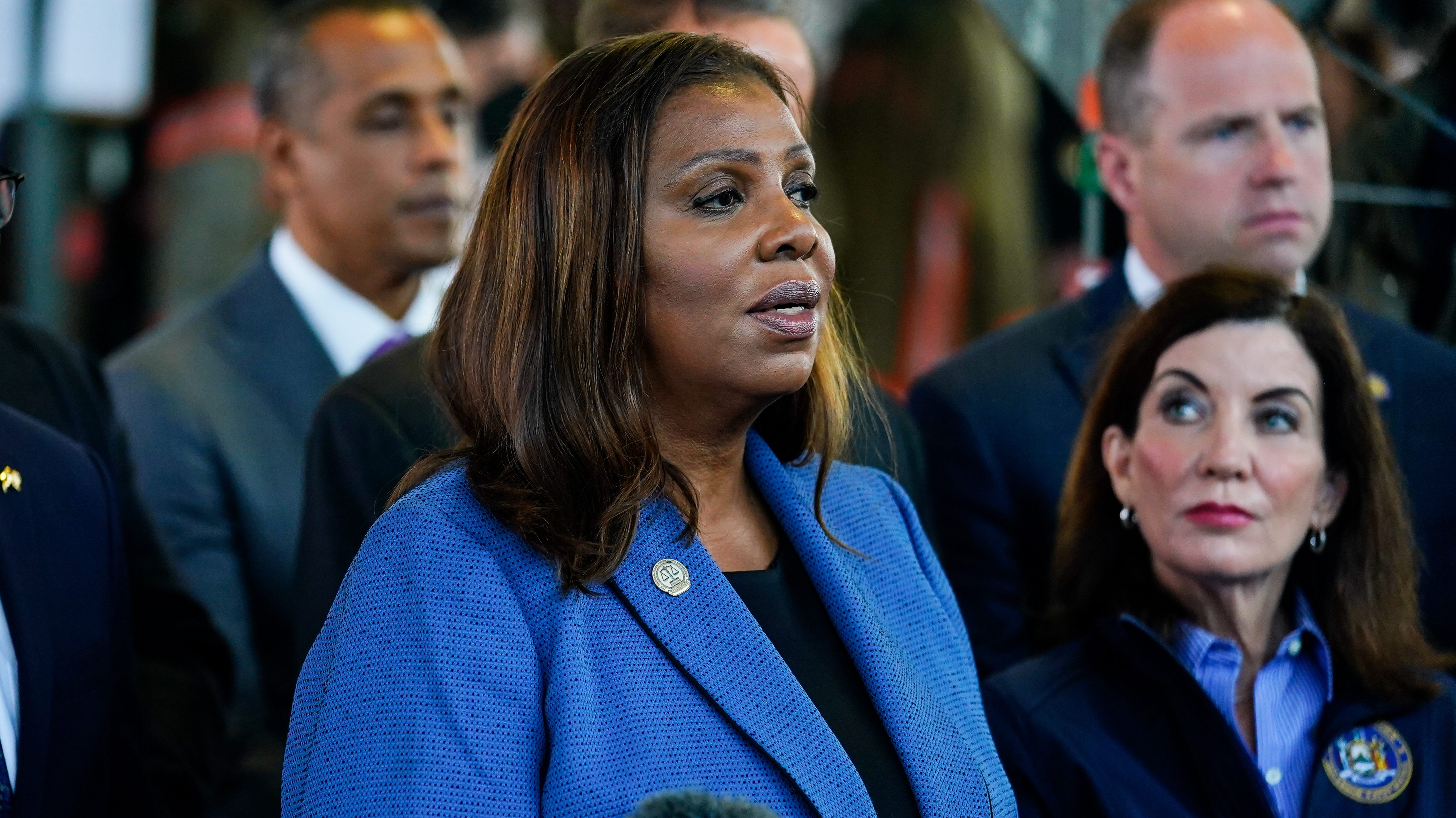
New York’s legal skirmish with Washington over commercial driver’s licenses for immigrants lays bare the limits of federal leverage—and the costs for crucial city infrastructure.
As potholes deepen and orange cones proliferate along the Brooklyn-Queens Expressway, a quieter rupture in New York’s arteries is unfolding, all but unnoticed by the driving public. At stake is $73m in federal highway funds—money meant to keep traffic flowing, bridges sturdy and cyclists safer. Instead, these dollars have become the latest cudgel in a bitter dispute between New York State and the federal government, this time over who is permitted to steer the lorries and buses that fuel America’s largest city.
On April 19th, New York’s governor, Kathy Hochul, and attorney general, Letitia James, filed suit in federal court against the US Department of Transportation (DOT). Their goal: force the release of funds the department froze after concluding New York had improperly issued commercial driving licences (CDLs) to non-citizens who, the feds say, lacked valid immigration status. For the MTA’s drivers and the city’s fleet of delivery trucks, this is not merely theatre; the freeze, representing 4% of the state’s National Highway Performance Programme allocation, jeopardises maintenance and safety for millions of New Yorkers.
Washington counters that New York breached federal law by extending CDLs beyond the legal residency period of certain recipients. Sean Duffy, transport secretary, declared that Albany’s “lax” vetting risked unleashing “unverified and unqualified foreign drivers” on American roads, pointing to an audit that claimed over half of sampled licences failed federal criteria. The Federal Motor Carrier Safety Administration, whose audits occasionally struggle with the labyrinthine nuances of state record-keeping, insists the state must tighten its paperwork—or forfeit not just this year’s $73m, but a possible further $147m annually.
City officials recoil at the suggestion that their licensing regime is cavalier. They point to longstanding state laws, refined after years of consultation, which permit the issuance of CDLs to residents, regardless of immigration status, provided they meet New York’s standards. Ms Hochul’s administration has already curtailed the practice under federal pressure, drawing fire from transport unions concerned about a worsening driver shortage. Critics complain that the freeze is not rooted in public safety but politics—federal strong-arming dressed up as highway engineering.
The practical effects for New York are immediate. Roadwork projects hang in limbo, while the spectre of bus driver shortages looms over the city’s already-stretched transit services. Those with the least—communities in the Bronx and southeast Queens—stand to lose the most from delays to routine repairs and discretionary upgrades. As is often the case in Gotham’s infrastructure woes, costs pile up for everyone while resolution recedes.
At a second-order level, the spat taps into deeper political currents. The Trump-era DOT, whose policy blueprint persists under subsequent administrations with only tweaks, has wielded federal funding with increasing assertiveness in immigration battles. Yet the efficacy of this approach in a city that relies on immigrants for one-third of its workforce—truck and bus drivers included—is dubious. Union leaders warn that limiting driver pools, rather than safeguarding the public, threatens supply chains and slows the essential workers who power the city’s post-pandemic recovery.
New York’s predicament is hardly unique. Nationwide, similar standoffs have played out in California, Illinois, and New Jersey, all states with significant immigrant populations and ambitious sanctuary policies. In each case, the federal government’s strategy is to squeeze compliance from recalcitrant states by threatening the very lifelines that bind cities: federal dollars tied to roads, bridges, and rails. The tactic’s track record remains spotty. Courts, when pressed, have tended to side with state prerogatives—though not without scolding bureaucratic improvisation.
An uncertain road for cities beyond New York
The ripple effects reach beyond the five boroughs. As the US tiptoes toward an uncertain presidential election, clashes over immigration and federalism multiply. Governors keen to defend their patchwork of inclusionary statutes find themselves jousting with bureaucrats in Washington—often while potholes deepen and contracts lapse. The symbolism is as potent as the dollars: an empire state flexing its legislative muscle, only to run afoul of central authority and—at least for now—lose access to sorely needed transport funds.
There is also a cautionary tale for policy-makers concerned about the politicisation of federal programmatic funding. The blunt tool of withholding infrastructure dollars catches in its jaws not just wayward legislators, but also road crews, commuters, and the small firms who depend on predictable maintenance schedules. Federal leverage, when abused, risks making collateral of the very citizens the policies purport to defend.
For New York, the options narrow as the impasse lingers. Fiscal frameworks for 2025 remain in flux. City and state agencies, already straining under rising costs and pandemic-era budget gaps, face hard choices—delay projects, furlough workers, or reallocate funds from equally critical initiatives. The legal gambit by Ms James and Ms Hochul—a motion to accelerate proceedings and treat infrastructure as a non-negotiable priority—may yet prove shrewd. But the wheels of justice turn at their own pace, indifferent to the rhythms of morning rush hour.
Viewed in the round, the city’s role as a laboratory for immigrant integration and hard-nosed urban governance is again at the fore. New York’s blend of global ambition and fractious politics means battles over something as mundane as a trucker’s licence become proxies for far larger unresolved questions about who is entitled to move the city—and the country—forward.
For now, we reckon that freezing highway funds to force policy change is a puny lever—one that produces more bureaucratic drama than lasting reform. If recent judicial rulings and New York’s history of outlasting federal meddling are any guide, the city’s roads may yet rumble back to normal. But the episode bodes ill for a country struggling to reconcile its economic needs with the politics of inclusion.
Funding fights are poor substitutes for good policy. New Yorkers, as ever, will muddle through. But decades hence, the question may not be who drove what—but who refused to fix the road home. ■
Based on reporting from El Diario NY; additional analysis and context by Borough Brief.