Supreme Court Weighs If Haitians and Syrians Keep TPS as Legal Uncertainty Lingers
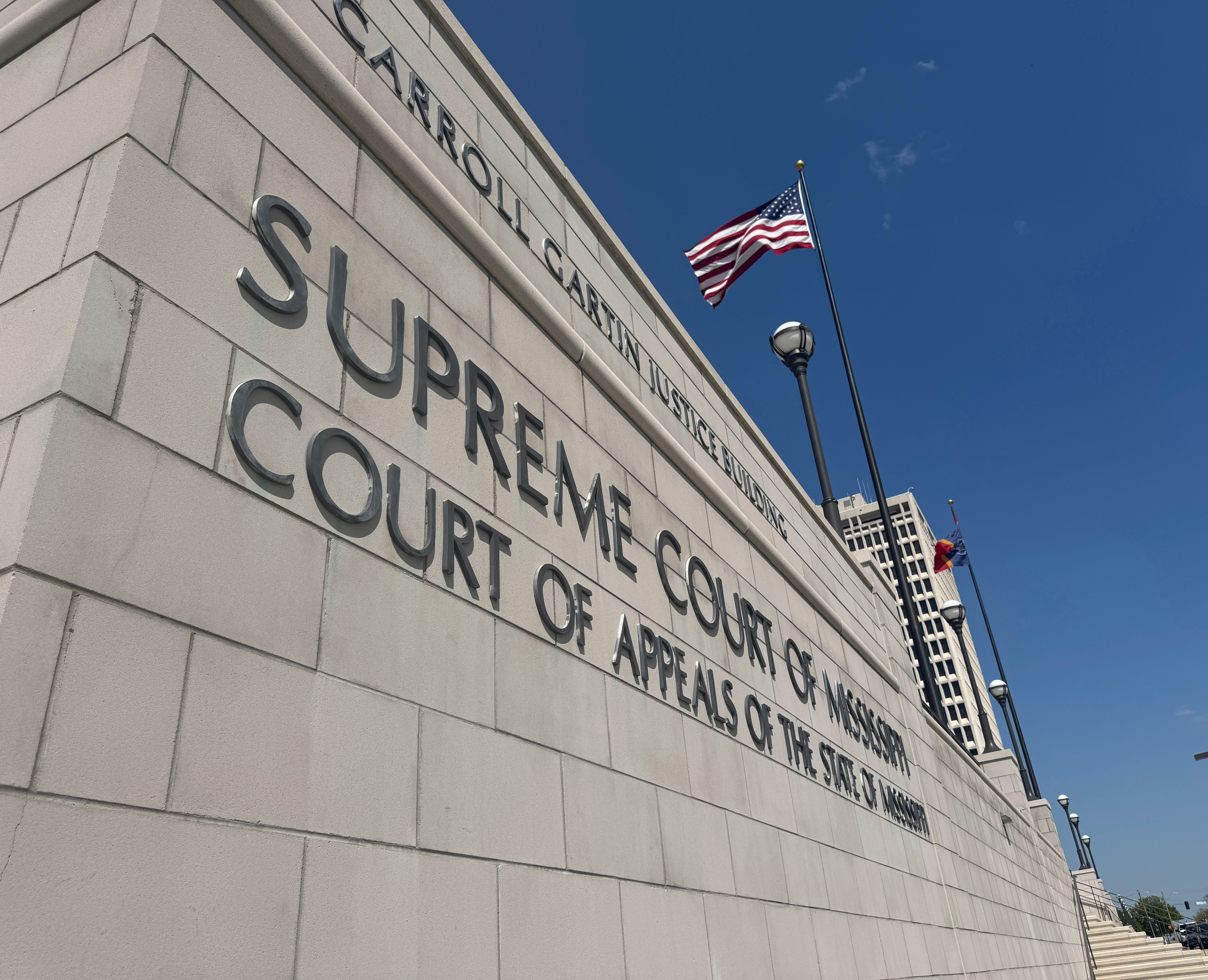
The fate of thousands of New Yorkers hangs on a Supreme Court debate over the legal shield that has allowed them to live and work in America for over a decade.
The future for tens of thousands of New Yorkers is now entangled in the stately chambers of the Supreme Court. At issue is the Temporary Protected Status (TPS) programme—a policy lifeline for some 350,000 Haitians and 6,000 Syrians nationwide—now standing at the threshold of abrupt revocation or unexpected extension. For a city built on migratory hope, the stakes are acute.
This week, the justices heard arguments stemming from the Biden administration’s attempt to strip TPS from Haitians and Syrians, on the rationale that conditions in both countries have sufficiently stabilised. The decision, endorsed by Homeland Security Secretary Kristi Noem, would reverse more than a decade of assurances, most recently renewed for Haiti in recognition of persistent instability following the 2010 earthquake and for Syria in the shadow of Bashar al-Assad’s drawn-out civil war. After Assad’s ousting in 2024, officials have contended that refugees no longer merit special protection.
At the core of the legal wrangling was not only whether Secretary Noem had reasonably judged improvements at origin, but whether such administrative muscle ought to be immune from court challenge. The government’s point man, Solicitor General D. John Sauer, argued with the vigour characteristic of those who interpret federal statutes narrowly: TPS, he claimed, “explicitly bars judicial review of both the secretary’s final decision and all antecedent steps.”
The ripples across New York are bound to be swift. TPS holders here—children enrolled in public schools, adults staffing hospitals and kitchens, small businesses paying taxes—have built roots deeper than any legal deadline. For many, the expiration of TPS portends not a new start abroad but wrenching displacement, or the purgatory of living undocumented once again. Should the Court side with the administration, the city’s social fabric could face a sudden tear.
Yet the impact does not stop at the water’s edge of personal circumstance. Employers, especially in vital sectors like construction, elder care and hospitality, may discover that a quiet but crucial stratum of their workforces has been made precarious overnight. The city’s already creaky shelter system might see an unexpected surge. State and city officials, ever the inheritors of federal immigration policy fallout, would be left cobbling together responses to ever-shifting populations.
New York’s predicament mirrors, in microcosm, dilemmas posed nationwide. Since its creation in 1990, TPS has oscillated between mercy and expediency: an instrument for presidents to respond—temporarily, but often indefinitely—to civil conflict and disaster elsewhere. Each administration has both weaponised and deferred the programme, depending on policy winds. Mr Trump’s prior efforts to terminate TPS for El Salvador, Honduras, Nepal and Afghanistan exemplify how the scheme has grown over decades into neither a path to citizenship nor a reliable shield, but rather a limbo perpetuated by inertia and litigation.
Judicial review—and its politics
What distinguishes the current skirmish is less the human toll—though that is grave—than the arcane legal question: how much discretion does the executive have, and how thick the wall against judicial intervention? Conservative justices gestured towards the supremacy of statutory text, noting that Congress seemed to exclude their own branch from the nitty-gritty of TPS enforcement. Liberals, for their part, expressed discomfort at closing the courthouse door, especially when claims of bias (including not-so-subtle references to Donald Trump’s infamous utterances about “shithole countries”) floated beneath the surface.
For city leaders, the prospect is unpalatable either way. Deference to federal authority feels like an abdication, yet unending litigation keeps families and neighbourhoods in limbo. As for the claim, raised by lawyers for the Haitian and Syrian plaintiffs, that the move was a product of animus, it is a reminder that even administrative actions nominally predicated on technical analysis are suffused with politics.
Internationally, America’s TPS debate is not unique—many rich countries face contested choices on the durability of “temporary” refuge as headlines recede but troubles at origin persist. Yet only rarely are these choices refracted through the lens of such legalistic constitutionalism. Most European states have at various times regularised long-resident crisis migrants. The United States, with its famously sticky legal categories, seems habitually allergic to closure.
To portend that the end of TPS, should the government prevail, will result in mass repatriation seems overstated; most who lose status will remain, working unofficially, or vanish into the folds of New York’s capacious grey economy. But to imagine there is no downside is a different breed of naiveté. Sudden insecurity for thousands will diminish everything from tax receipts to school attendance and snip yet another thread from the city’s social quilt.
In truth, the TPS saga is just one scene in the broader opera of American migration, where temporary status is perpetual and policy is ever in search of principle. The Supreme Court’s eventual decision—which is unlikely to resolve the contradiction—will merely pass the buck back to Congress, which has evaded the duty to clarify the rules for over three decades.
New York, as ever, remains a test bed for what the country chooses—and fails—to do, both neighbor and border. History suggests inhabitants will muddle through, as they usually have, but not without costs widespread and quietly severe.
The city’s future, and its claim as a model of pragmatic cosmopolitanism, would be better served by consistent rules and a willingness to regularise the status of those who have long since become neighbours. For now, as the judicial clock ticks, thousands wait—for certainty, or for yet another reprieve. ■
Based on reporting from El Diario NY; additional analysis and context by Borough Brief.