Spirit’s Exit Lifts NYC Summer Airfares 24 Percent, Leaving Budget Travelers Grounded
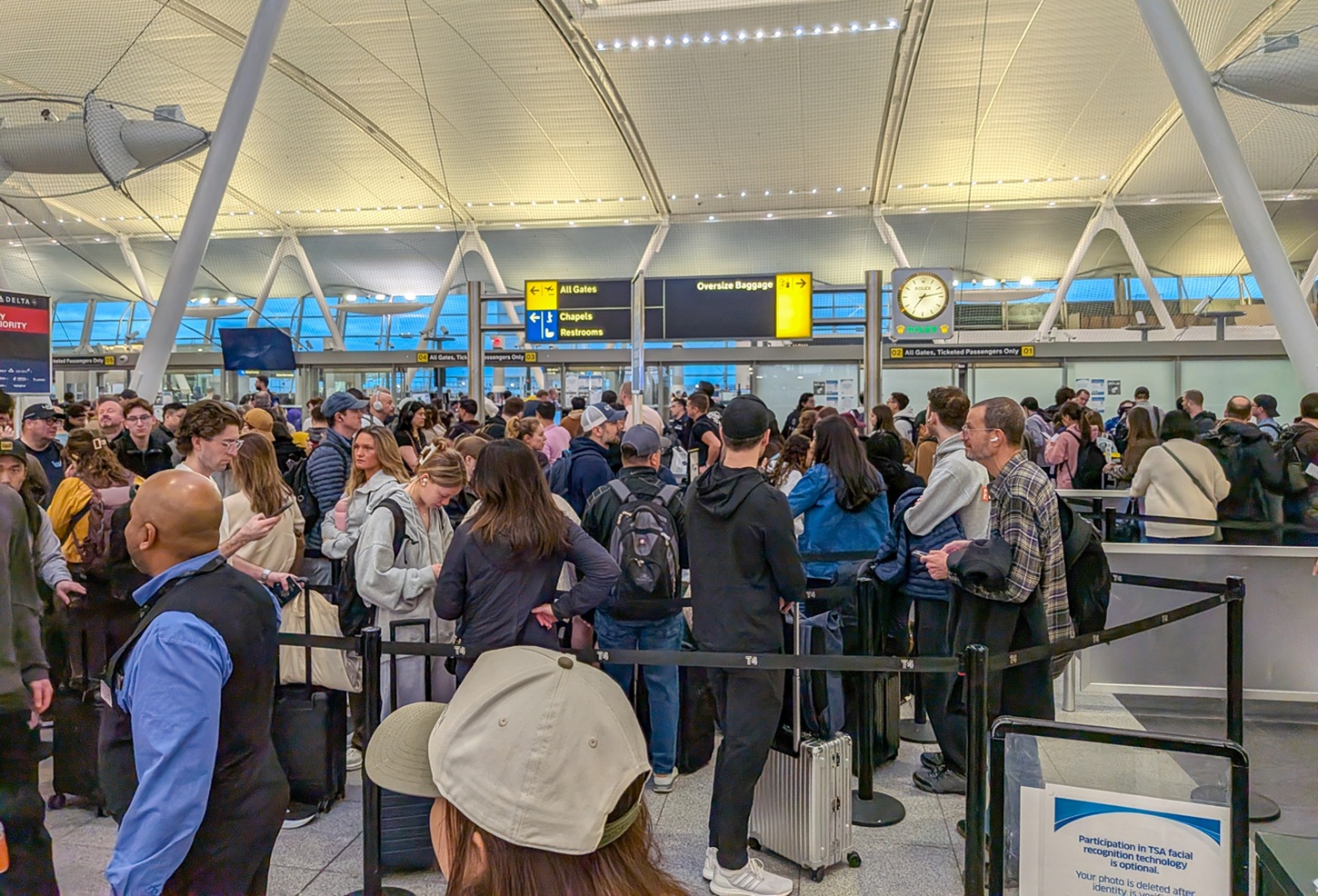
The abrupt exit of Spirit Airlines is forcing millions of low- and middle-income New Yorkers to rethink their summer travel plans, hinting at broader pressures on America’s aspiringly mobile classes.
For many New Yorkers, the summer’s costliest ticket is not to Broadway but to somewhere—anywhere—beyond the city’s clamorous streets. This year, that ticket’s price has soared. The demise of Spirit Airlines on May 3rd, after 34 years shepherding price-conscious travelers to sunbelt destinations, has caused domestic airfares to jump $70 per seat on average—an increase of 24% since last year, according to Kayak and the U.S. Travel Association.
Spirit’s abrupt bankruptcy has hit the city’s immigrant and working-class households especially hard. For decades, its garishly yellow planes ferried families to Florida, Nevada or Texas at no-frills prices; suddenly, these pathways feel less accessible than ever. “Nos disculpamos de manera específica con los estadounidenses que ahora podrían quedar completamente fuera del acceso al transporte aéreo,” Spirit’s counsel apologised in court, as the airline confessed its inability to compete against deep-pocketed rivals and punishing oil prices.
The effect on New York is not subtle. Kennedy and LaGuardia, both major Spirit hubs, now see fewer options for those for whom every dollar counts. The city’s Hispanic communities—whose ties and obligations often stretch southward—are pinched, forced to reconsider summer reunions or family milestones. For them, the summer getaway may now come at the cost of something else: a cheaper hotel, fewer meals out, or even cancelling plans altogether.
These first-order consequences portend broader strain. The costs of travel—hotels, gasoline, meals—have all risen at roughly twice the pace of overall inflation. For families already managing paltry vacation budgets, each extra expense bites. The average domestic round-trip now stands at $365, while international fares are up 12–14% year on year. With each spike, New Yorkers’ fabled ability to “get out of town” becomes a little less democratic.
Travel, ever an aspirational act in America, thus risks reverting to the privilege of the well-heeled alone. The loss is not just emotional or familial: New York’s service sector leans heavily on tourism dollars that summer travelers export and import in equal measure. Fewer feasible trips mean less cash spent in the orbit of airline corridors—airports, rental cars, outlying hotels—so even businesses on the city’s periphery feel the drag.
Deeper still are the knock-on effects for the wider airline market. Spirit was the city’s price warrior, forcing Delta, JetBlue, and United to keep some fares within reach of the masses by offering basic economy products. With that pressure vanished—at least temporarily—rivals are likely to drift upward, emboldened by the removal of a pesky underbidder. Frontier, the lone survivor among ultra-low-cost airlines, has already started eyeing Spirit’s abandoned turf; yet, by industry admission, it cannot fully fill the vacuum.
The sector is unmistakably consolidating. Elsewhere among the discounters, Allegiant Airlines is buying Sun Country for $1.5bn, whittling two minor players down to one. As power accrues to fewer hands, the anti-monopoly refrain grows louder. Regulators may yet prod remaining carriers to keep some semblance of affordability, but history offers little reassurance—each airline merger of the past 30 years has yielded, in the end, higher fares and fewer flights to secondary cities.
Higher and less mighty: summer travel as a bellwether for American inequality
If New York’s woes feel parochial, they are an American microcosm. Across the country, families are reckoning with summer holidays shaped more by steeper fares than by tourist guides. Nationwide, average airfares have climbed faster than official inflation, a rare divergence in a sector accustomed to erratic but generally bargain-bound pricing. The invisible class divide—between those for whom each $70 means something, and those for whom it doesn’t—widens a notch.
Globally, American airfares remain competitive with Europe’s, at least before one factors in the perennial indignities of baggage fees, sprawling hub transfers, and the arcane logic of “ultra-low-cost” modeling. Still, the swift demise of Spirit, felled as much by international fuel price shocks (Iran’s saber-rattling has pushed crude higher) as by domestic competition, hints at fragility in the low-cost end of a supposedly robust market.
For policymakers, the moment is instructive. Decades of deregulation have delivered moments of buoyant competition, but also recurring convulsions as weaker carriers perish or are absorbed. The present spasm, sparked by fuel shocks and over-capacity on low-margin routes, should give pause to any cheerleader for laissez-faire orthodoxy. Airports like LaGuardia still bear the scars of past airline retrenchments; another cycle bodes well for no one.
In economic terms, stability and affordability are seldom natural bedfellows in the airline business. For now, New Yorkers with means will still find a seat on Delta or JetBlue to Miami Beach or Las Vegas, albeit at a premium. But the city’s backbone—a mosaic of striving, traveling families—faces tougher choices: longer bus rides, road trips with costlier gasoline, or simply staying put. The summer of 2024 may be a postcard not from paradise, but from a city learning the limits of its mobility dream.
This is no mere inconvenience. In a metropolis built on the promise of upward—and outward—movement, anything that draws boundaries more sharply undermines the city’s social compact. We reckon that the challenge for both carriers and regulators is clear: keep America’s airways as open as its aspirations. Otherwise, a rite of passage could become a privilege once more. ■
Based on reporting from El Diario NY; additional analysis and context by Borough Brief.