Rent Board’s Mixed Data Gives Both Sides Ammo as Freeze Debate Looms
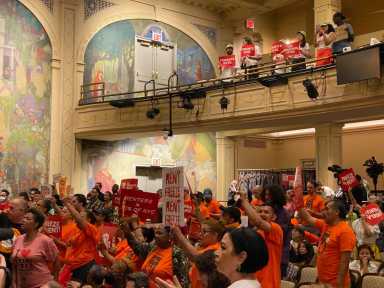
The city’s annual rent-control tug-of-war is again animated by duelling data, raising thorny questions about housing policy, affordability, and the business of being a landlord in New York.
Nothing in New York is quite as polarising as rent—except, perhaps, the Rent Guidelines Board (RGB), where the city’s landlords and tenants once more waggle duelling reports at one another in a familiar tug-of-war. The board’s latest statistical salvo landed on April 9th with the release of its Price Index of Operating Costs (PIOC) and Mortgage Survey for 2026, offering ammunition for both tenant advocates, who demand a rent freeze, and landlord representatives, who cry penury.
The facts, both bland and beguiling, speak for themselves. The PIOC found owners’ operating costs for buildings with rent-stabilized apartments rose by 5.3% this year, propelled by an eye-catching 11% spike in fuel costs and an even more robust 10.5% rise in insurance expenditures. Yet, the Mortgage Survey reported a buoyant 10.5% jump in average per-unit sales prices for rent-stabilized buildings in 2025, a hefty 33% increase in sales volume, and an even more impressive 20.4% price inflation for fully stabilized properties. All this as vacancy and collection losses—the money landlords fail to collect—climbed from 3.14% to 5%.
The RGB’s April Income and Expense Study muddies the waters further. Citywide, net operating income (NOI) for buildings with stabilized units ticked up by 6.2% between 2023 and 2024. Collected rent and total income were up by roughly 5%, while operating costs climbed 4.2%. Meanwhile, the share of distressed properties—those struggling with deep financial woes—dipped, covering just 9.2% of the sample.
Not all stabilized buildings, however, fare equally. Those with at least half their units stabilized saw NOI grow a mere 4%. Properties with 80% or more stabilized units managed only 3.5%, and the oldest, fully stabilized pre-1974 stock limped in at a paltry 1.4%. These data portend less lucrative returns for owners whose portfolios are heavy with traditional rent-regulated units, yet such properties remain the backbone of New York’s affordable housing supply.
Interpretation of the numbers is, as ever, a matter for fiery debate. For tenant representatives, tepid income growth among the city’s oldest stabilized buildings justifies a freeze on rents—or perhaps even a rollback—to avoid squeezing lower-income residents harder. Landlords counter that the RGB’s cost index, arguably a flawed tool, still understates the financial weight of surging energy and insurance costs, as well as escalating taxes and the unpredictability of city finance.
At stake is nothing less than the future of one million regulated apartments, home to nearly a quarter of New Yorkers. A significant rent hike risks swelling the city’s already bulging ranks of rent-burdened households. An overly tight squeeze, on the other hand, could sap the viability of aging housing stock and discourage private investment. The RGB, charged by law with balancing the needs of tenants and owners, faces a familiar conundrum with a new twist: economic volatility has made projections hazardous and consensus even more elusive.
The city’s landlords—some corporate, many small—argue that rent-stabilized housing is fast becoming a puny business. High costs and strict profit ceilings, they complain, have left little room for error, particularly for older properties facing capital needs they lack the funds to meet. Tenant groups reply that the consistent appreciation in property values, as evidenced by the latest sales figures, speaks volumes: “distress”, in real estate, is a relative term.
New York’s predicament is, to a degree, its own. Nowhere else in America is rent stabilization so deeply embedded in city life, yet versions of the same argument are staged in Boston, Los Angeles, and beyond. San Francisco’s struggles with housing affordability and landlord discontent echo many of the same local pathologies. Globally, cities with robust rent controls—from Berlin to Stockholm—have grappled with tight supply, under-investment, and sometimes awkward policy pivots to open up their rental markets.
Dueling data and the politics of housing scarcity
The RGB’s reliance on statistical models—and the intense scepticism this practice provokes—also mirrors broader trends. One tenant-aligned board member, Adán Soltren, argues that the PIOC has outstripped measured expense growth for years, and may lean too heavily on inflation in areas such as fuel. Its illustrative formulas, he claims, can create more consternation than clarity, especially in the absence of a comparable tenant-side index. Meanwhile, owner representatives, such as Christina Smyth, push back: striking out “unpalatable” data, they warn, is no way to craft policy.
Policy failures here tend to multiply. A rent freeze might offer welcome relief to struggling households—at least in the near-term—but could portend further disinvestment in New York’s aging buildings, particularly the vast, unglamorous stock built before 1974. Conversely, a chunky upward adjustment risks accelerating tenant hardship and fanning vocal discontent across the city’s fractious electorate, a constituency Mayor Eric Adams cannot afford to ignore.
The stakes for New York’s broader economy are hardly trivial. Curbing rent increases may bolster disposable income for working families, who already face some of the continent’s highest living costs. On the other hand, an exodus of small landlords from the market—whether through sales to larger firms or outright abandonment—could reduce competition and fuel the very property price inflation and market concentration policymakers profess to loathe.
The cacophony of numbers and caveats obscures a stubborn fact: New York’s fundamental housing problem is one of scarcity, not just affordability. For all the board’s statistical jousting, releasing more supply—through new construction, streamlined conversion of commercial properties, or judicious zoning reform—remains the surest (if slowest) balm for the city’s housing woes.
A wry observer could be forgiven for suspecting that the city’s annual RGB rituals serve mainly to distract from this more prosaic, yet daunting, truth. The board’s debates, indexes, and commensurate formulas are unlikely to fix New York’s rent anxiety so long as underlying supply remains miserly. Well-meaning policies risk becoming a patchwork of short-term salves, not a cure.
New York’s annual rent round will again produce winners and losers; the arguments, and their supporting spreadsheets, will be familiar. Unless the city reckons seriously with its chronic under-production of housing, both tenants and landlords will continue to find the future uncomfortably expensive, and ever more uncertain. ■
Based on reporting from amNewYork; additional analysis and context by Borough Brief.