Queens Homeowners Already Squeezed as City Eyes Property Tax Hike to Plug $5.4B Deficit
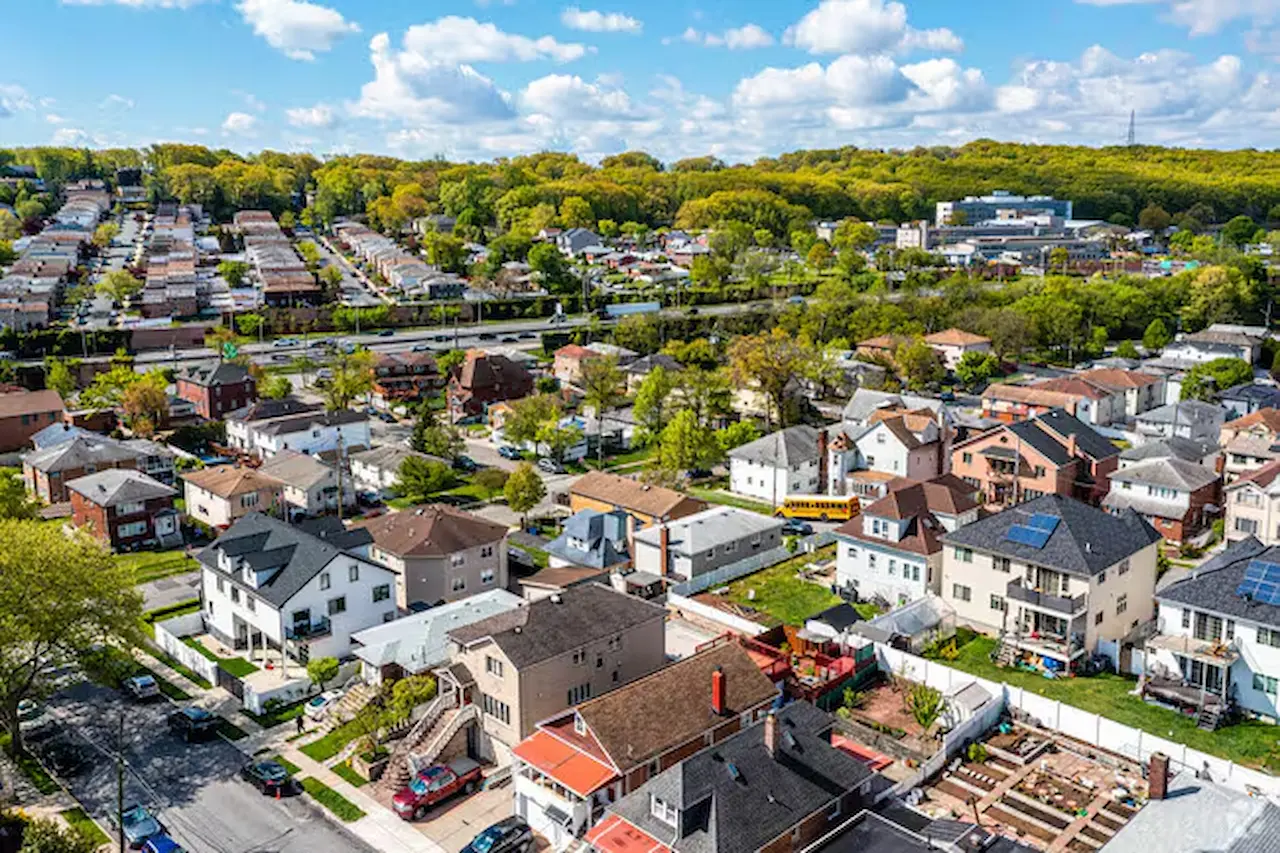
Efforts to address New York City’s yawning budget shortfall by raising property taxes risk deepening inequities for homeowners of colour, amplifying calls for broader, wealth-targeted solutions.
When the city that never sleeps finds itself staring at a $5.4bn deficit, the question is not whether to raise taxes, but whose pockets to tap. In New York, where the glint of Park Avenue coexists uneasily with the working-class rhythms of Queens Village and St. Albans, the answer casts a long political—and geographical—shadow. For decades, City Hall has relied on property taxes to fund schools, hospitals, police and pothole repairs. Now, with shortfalls looming and Washington’s largesse waning, the prospect of ratcheting up levies on already-strained homeowners has sparked a predictable but salient backlash.
In early 2024, Mayor Zohran Mamdani made waves by floating the possibility of a property-tax hike as a “last resort.” This was hardly a clarion call—more a weary admission of fiscal constraint—but it landed with a seismic thud among city homeowners, particularly in the city’s outer boroughs. Many, like the Haitian-American security guard in Queens who recently voiced his fears in City Limits, recall the Great Recession as a period when foreclosure stalked every block. For them, another climb in annual bills threatens not inconvenience but eviction.
The city’s current property-tax regime, designed decades ago, is often described as both byzantine and regressive. Homeowners in predominately Black and immigrant enclaves like Jamaica pay a significantly higher effective tax rate than their counterparts in more affluent, whiter precincts of Brooklyn or Manhattan. According to the city’s Finance Department, a typical one- or two-family home in Southeast Queens faces a rate sometimes double that levied on luxury flats overlooking Central Park. In a metropolis with poverty rates nearing twice the national average—some 23% of New Yorkers live below the threshold—such inequities are not mere footnotes but central to the fate of the city’s middle and working classes.
At issue is not simply the mounting cost of city services, but the structural predicament of a tax base that leans heavily on property owners while carving out loopholes for the very rich. The 2017 Tax Cuts and Jobs Act, widely known as President Donald Trump’s “One Big Beautiful Bill Act,” turbocharged this imbalance by slashing federal tax liabilities for high earners. Each year, the city’s millionaires and billionaires now pocket an estimated $129,600 more, on average, courtesy of Uncle Sam. Meanwhile, the mayor’s defenders insist that it is Albany, not City Hall, which holds the real purse strings—and the power to rebalance the books.
The governor, Kathy Hochul, has proffered a pied-à-terre tax on luxury second homes as a gesture toward fairness. While symbolically potent—few can sympathise with the plight of absentee oligarchs—its fiscal impact is puny: the levy would raise hundreds of millions, not the billions required to patch the city’s crumbling infrastructure. The political effect, however, has been to harden divisions between upstate and downstate, homeowners and wealthy investors, those who see New York as a home and those who treat it as a trophy.
For city dwellers in the crosshairs, the squeeze is palpable. Slow wage growth and inflation have already outpaced increases in take-home pay for most, leaving little wriggle room for added fiscal demands. To borrow from the plaintive op-ed, “2 percent for Mike Bloomberg is not the same as 2 percent for me.” Absent relief, many owners may soon join the exodus of New Yorkers whose departure has accelerated since the pandemic’s onset—further shrinking the pool of property-tax payers and compounding the city’s long-term woes.
The longer-term consequences stretch beyond municipal spreadsheets. If the city leans too heavily on increasing property taxes, it bodes ill for already-strained communities: driving out owners of colour, further segregating neighbourhoods, and eroding the very diversity on which New York prides itself. Schools, transport, and social safety nets—funded by public dollars—risk being slashed under an austerity regime. As resources grow thin, those least able to cope face the brunt of diminished public goods.
Other cities, similar dilemmas
New York’s predicament is hardly unique. San Francisco, notorious for both billionaires and bankruptcies, recently tussled over a “mansion tax” that stoked howls from the real-estate lobby but ended up shoring up city finances—albeit modestly. London and Paris, too, have targeted luxury properties for special treatment. Yet the underlying tension remains: how to match 21st-century needs with tax regimes designed for the era of rotary telephones.
Data suggests New York’s reliance on property taxes is unusually high for a global metropolis. According to the Citizens Budget Commission, property taxes supply roughly 30% of the city’s total annual revenue. But unlike commercial landlords, homeowners—especially in working-class districts—lack the lobbyists and lawyers to defend their interests. The result is a tilted playing field: a quirk-laden code in which brownstone owners in Park Slope enjoy lower rates than renters-turned-owners in the city’s more modest quarters.
Governor Hochul’s proposals inch in the right direction, but a truly progressive overhaul would require bolder action, putting wealth taxes or broader state-level reforms squarely on the table. The political risks are significant: the city remains deeply dependent on revenue from its richest residents, and calls to make “millionaires cough up just a little more” rarely go unanswered by exit visas. Yet the alternative—allowing the city’s backbone to be forced out by fiscal expediency—portends a bleaker New York: one of absentee landlords and worker-bees, not dreamers and doers.
We reckon New York’s present standoff is not a mere fiscal headache but a test of civic priorities. The city’s penchant for muddling through—squeezing “austerity” out of already-anxious homeowners while offering gentle nods to the über-wealthy—may buy time, but it will not cure the malaise. At stake, ultimately, is not just the balance sheet but the social contract that binds city and citizen.
If New York is to remain both solvent and vibrant, it must engineer a tax system less punishing to working-class owners and more attuned to the ballooning fortunes at its apex. That will require political will—and a recognition that, in finance as in architecture, patchwork repairs rarely suffice. ■
Based on reporting from City Limits; additional analysis and context by Borough Brief.