Private Renewable Projects Teeter in New York as Public Power Push Gains Ground in Albany
New York’s renewable transition is faltering as private investment stalls, prompting debate over whether public power can deliver the clean, affordable energy promised by climate laws.
New Yorkers hoping for a future lit by wind, sun and water may be disappointed to learn that more than 20 major renewable energy projects—enough to power 2 million homes—now face cancellation. Solar and wind developers, squeezed by tariffs, inflation, and tepid profit forecasts, are pausing or scrapping projects across the state. The news could not come at a less opportune moment: over one million of the city’s residents are at least two months behind on their utility bills, and fossil fuel volatility, sharpened by wars abroad, leaves the grid’s future wobblier than ever.
The freeze marks a telling failure in the state’s ambitious drive to ditch fossil fuels and electrify its economy. Renewable capacity, promised by Albany’s 2019 Climate Leadership and Community Protection Act (CLCPA), was supposed to deliver cleaner air, cheaper bills, and tens of thousands of union jobs. Instead, progress has stalled as global supply chain snarls—amplified by Trump-era solar tariffs—and costly local interconnection fees render new projects unprofitable for many developers.
Policy-makers fret about both the immediate and the structural fallout. Energy insecurity, already a fact of life for New York’s poorest, may now spread. If fresh renewable supply falters, the city’s reliance on natural gas-burning “peaker” plants could drag on, with air quality and climate targets imperilled. People will likely see persisting, even ballooning, monthly bills, when many can barely afford to keep the lights on.
This impasse exposes a more basic conundrum: whether the logic of private energy markets serves the public at all. In principle, competitive finance should (eventually) deliver the lowest-cost electrons. In practice, when costs spike and profits shrink, investment slumps—no matter how dire the social need. Critics point to billions in stranded assets and a market fixated on shareholder returns, rather than on continuity of service.
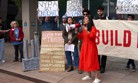
Activists and several politicians now advocate a leap back to the future: expanding public power. Advocates tout the New York Power Authority (NYPA), established in the 1930s by then-Governor Franklin D. Roosevelt to shield ratepayers from speculators and to keep Niagara’s hydro riches within state coffers. Last year, lawmakers bolstered NYPA further via the Build Public Renewables Act, granting the utility a fresh mandate to build and own large-scale renewable projects.
The argument for public intervention is not merely nostalgic. NYPA’s 2023 budget set aside $200 million for new public renewables, and an additional $200 million in 2024 could, proponents say, help the state ramp toward 15 gigawatts of clean power by 2030. Unlike private firms, NYPA need not deliver a “healthy” profit to distant shareholders. All its returns flow, at least in theory, to ratepayers or to reinvesting in the grid.
Alongside these hopes come daunting implementation puzzles. Public utilities can move briskly—or lurch like mastodons in molasses. Regulatory overreach, cost overruns and tepid innovation have historically dogged government-owned enterprises, even as private financiers stumble at the starting gate. And scaling up to meet CLCPA targets would demand not just money, but nimble management, workforce development (the act promises 20,000 to 30,000 “green union jobs”), and shrewd grid modernization.
The risks of inaction, however, are not hard to spot. New York’s battered utility customers face a familiar dilemma: pay more, pollute the skies, and accept recurring shortfalls in climate ambition—or gamble that public power, with all its trade-offs, can break the logjam. Some environmentalists warn that further delay will cement reliance on polluting peaker plants—mainly located in low-income outer boroughs—prolonging environmental inequity.
Can New York rewrite the rulebook for renewables?
Comparison with other states and nations is instructive. California, which faces its own confounding mix of private utilities and state mandates, has endured blackouts and ballooning costs. Texas, famously laissez-faire, has delivered abundant wind and solar, but left grid reliability wanting and market incentives misaligned with public needs. Across the Atlantic, much of Europe leans more heavily on public utilities, with mixed results—France’s EDF, for instance, has delivered rock-bottom prices at the cost of bureaucratic sclerosis.
The debate ultimately hinges on the peculiarities of New York’s market and political culture. Public sector advocates must demonstrate they can outcompete not only profit-driven developers, but also bureaucratic inertia and political horse-trading. The transition also threatens to roil existing contracts and labor markets—private investors will not yield gracefully, and unions want firm guarantees on pay and staffing as fossil-fuel jobs wane.
Still, there is room for measured optimism. New York has a robust tradition of using public instruments to steer markets when private incentives fail, from housing and health care to water and transit. If Albany can summon sufficient administrative mettle and guard against the pitfalls of state-capture and boondoggles, NYPA might—just—prove fit for purpose.
In all, New York stands at an instructive crossroads. Laissez-faire market solutions have plainly failed to deliver the scale and speed of clean power needed in America’s premier city. Whether the public sector can avoid the familiar quagmire of overpromising and underdelivering is the question upon which a decarbonised, affordable New York depends.
Long-embattled city dwellers might just prefer their electrons “public” for once, provided they arrive on time and at a palatable price. The experiment is about to begin. ■
Based on reporting from City & State New York - All Content; additional analysis and context by Borough Brief.