Organized Insurance Fraud Drives NYC Auto Premiums Past $4,000, Hochul Reform Hits Political Traffic
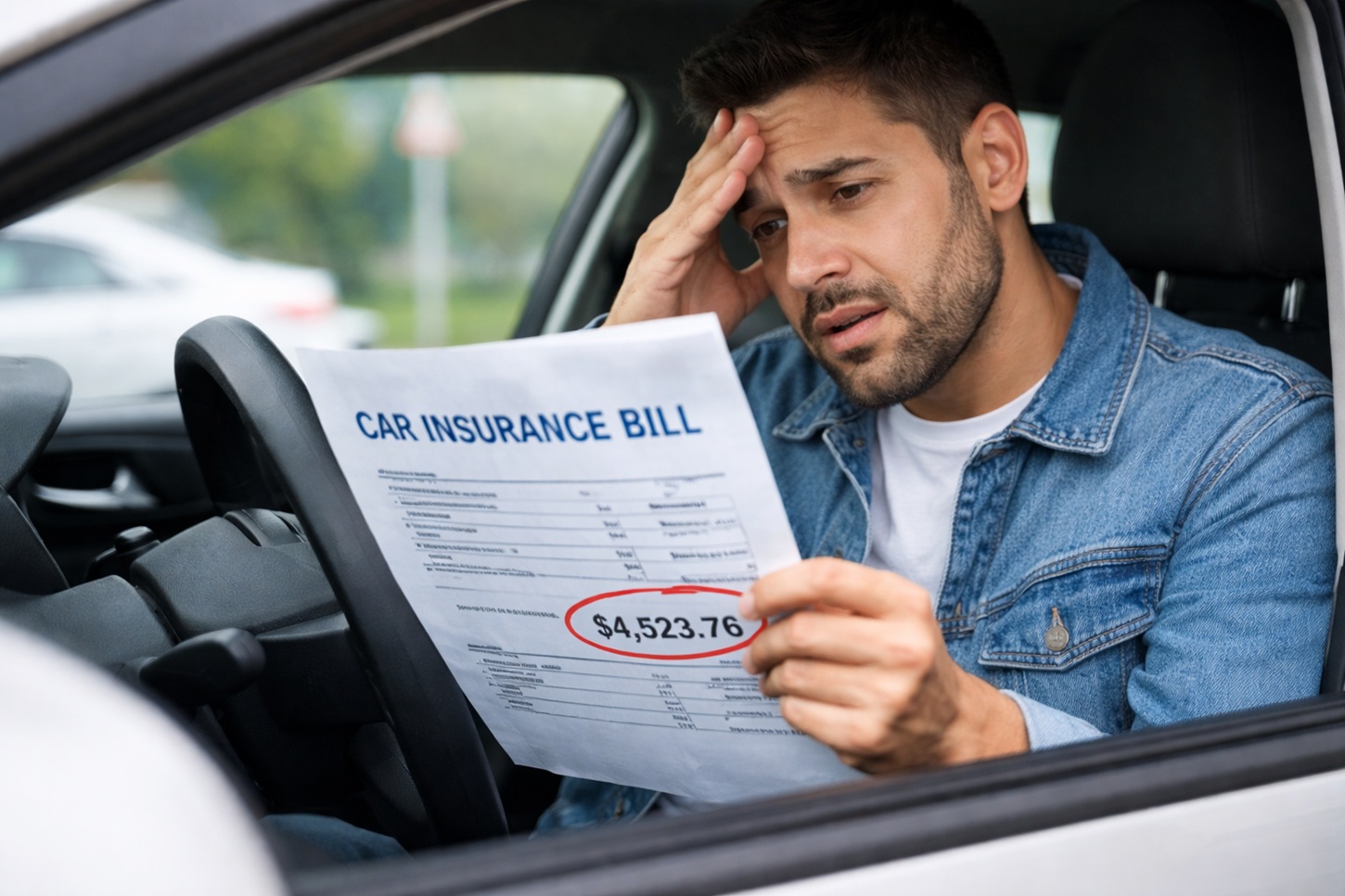
Rampant auto-insurance fraud is driving New Yorkers’ premiums sky-high—testing political will and household budgets alike.
Sticker shock at the pump is one thing; sticker shock at the insurance office is another. In New York, motorists now face some of the highest auto insurance premiums in the nation, with the average annual policy costing more than $4,000—a full 52% higher than the national mean. In some city boroughs, such as Brooklyn, prices breach $6,700 for full coverage. For many, these numbers are not mere abstractions but steep, unavoidable levies cutting into household essentials.
Behind these punishing rates lurks an epidemic of insurance fraud, itself swelling at an alarming clip. From 2020 to 2025, suspected cases of vehicle-related insurance fraud rose 80%, topping 43,800 in 2025 alone, according to the state’s Department of Financial Services. In round numbers, nearly 1,700 of those were judged intentional car crashes. By any metric, New York’s roads have become as lucrative for criminal syndicates and unscrupulous legal operators as for Uber drivers.
The no-fault insurance system—designed decades ago to ensure prompt medical care for accident victims—now looks increasingly like a sieve. It compels insurers to cover medical expenses, regardless of who is to blame for a crash. What was once a well-intentioned shield for the injured has become a honey pot for scam artists. Crime groups fabricate accidents, enlist rogue doctors and lawyers, and file phoney claims running into the tens of millions.
A recent federal case displays the mechanics of such schemes. On April 1st, Zhan ‘Johnny’ Petrosyants, aged 44, was indicted in Manhattan, accused of orchestrating a sprawling network of bogus claims between 2018 and 2023. His associates, says the Southern District U.S. Attorney’s Office, included corrupt physicians, legal fixers, and shell companies paid to conjure up diagnoses and process fake reimbursements. The proceeds? Enviably gargantuan, if one lacked scruples.
For the city’s working poor, the costs are as concrete as a missing rent cheque. Hispanics, immigrants, and other communities for whom private vehicles are not a luxury but a necessity bear the brunt. Even a modest family sedan, once a path to opportunity, teeters on becoming a luxury good. According to Kathryn Wylde, head of the Partnership for New York City, those with tight budgets are “compromising financial stability just to drive.”
The economic harms radiate beyond direct victims. Elevated premiums corrode consumer spending, siphoning dollars from local businesses and depressing employment. Insurance fraud’s profits line the pockets of organised offenders, not Main Street. The sector’s legal arms race between insurers and scam artists funnels resources into compliance and litigation, rather than claims service or innovation.
Politically, fixing the mess has become a test of both resolve and priorities. Governor Kathy Hochul, facing pressure from motorists and advocacy groups, introduced a reform bill in February 2026 aimed at toughening enforcement and plugging legal loopholes. The package includes mandatory reporting, stricter claim scrutiny, and new penalties for bad actors. Yet, in Albany, the budget—and the reforms within it—remains gridlocked. Special interests abound: trial lawyers, medical lobbies and even insurers joust for advantage.
Comparisons and cures from beyond the Hudson
New York’s insurance woes are not wholly unique. No-fault systems in Florida, Michigan, and New Jersey also attract fraudulent actors, though none match New York’s scale or inventiveness. Michigan’s recent partial rollback of no-fault benefits, for instance, dampened fraudulent claims, but at the political cost of reducing payouts for genuine victims. Florida’s experiment with piecemeal reforms yielded tepid results, as enterprising fraudsters changed tactics.
The contest between fraud-fighting zeal and consumer protection, it turns out, is universal. In Europe, most states rely on liability-based systems rather than no-fault, resulting in fewer avenues for systematic abuse—but also slower compensation and more litigation after accidents. No method is flawless; all entail political trade-offs.
What distinguishes New York is the sheer intensity of the problem and its staggering price tag. Despite decades of “crackdowns”, fraud rates remain stubbornly buoyant. Law enforcement investigations net the occasional ringleader, but the system’s underlying incentives—quick, guaranteed payouts and loose claim verification—persist. For every Johnny Petrosyants unmasked, several aspirants lurk in the wings.
While the state’s proposed reforms may blunt some of the worst abuses, they will not make insurance cheap overnight. Reducing premiums will require both a toughened legal arsenal and a willingness to confront the lobbying prowess of industries accustomed to feeding at the trough. Data transparency—on claims, payouts, and legal outcomes—ought to be non-negotiable.
In the meantime, New Yorkers will continue to bear the hidden costs of a system meant to protect them. As in so much else, the city portends wider national struggles: the uneasy balance between consumer protection and individual responsibility, and the price society pays for loopholes left unplastered. Road safety may be an aspiration, but financial security is the more urgent casualty.
Policymakers must learn from the failures of other states: piecemeal tinkering will not suffice. A broader, evidence-driven reexamination of the no-fault premise is overdue. If New York cannot fix its insurance morass, its streets risk becoming a case study in how well-meaning social contracts curdle under the strain of opportunism and inertia.
For now, the city’s motorists (and their wallets) must slog on—hoping that the next budget stalemate, like the next “fender-bender,” does not set them further back. ■
Based on reporting from El Diario NY; additional analysis and context by Borough Brief.