NYCHA Runs Out of Federal Emergency Housing Vouchers, Brooklyn Families Face Uncertain Shelter
The sudden depletion of federal housing assistance funds threatens to swell New York’s homeless population and exposes the precarity of America’s social safety net.
At $5,000 a month, a one-bedroom flat in Manhattan now costs more than the median annual wage in most American cities. In Brooklyn, where rents hover at a not-so-paltry $4,295, even the lucky holders of housing vouchers have little cause for celebration. This month, the New York City Housing Authority (NYCHA) began warning over a thousand voucher recipients—including families like Lashonne Smith’s in Brooklyn—that their emergency federal rental assistance is running out, years ahead of schedule.
The culprit is the abrupt exhaustion of the Emergency Housing Voucher (EHV) scheme. Congress created the programme in 2021, at the height of America’s pandemic-era housing crisis, to forestall mass evictions. It was targeted at the homeless, those at risk of losing their homes, and victims of domestic violence—a population now estimated at some 70,000 nationally, with roughly 1,200 in New York City alone. Administered by the Department of Housing and Urban Development (HUD) and channeled locally through housing authorities, the vouchers meant that beneficiaries paid 30% of their rent, while the federal government covered the balance.
The programme, policymakers intended, would last until at least 2030. Those ambitions have proven optimistic. Soaring rents in metropolitan hubs, especially New York, have devoured the allotted funds at a ravenous pace. Federal authorities now reckon the last EHV dollar will be spent before the end of 2026—a full four years before the intended sunset.
NYCHA’s clients thus find themselves in a familiar bind. Mrs Smith, a mother of two, thought she was safe when, in 2022, she was granted an EHV voucher. An email last week—bearing the NYCHA logo—felt, she said, like “a bomb” had landed. And with the authority’s list of wait-listed applicants for other subsidised housing already stretching beyond 150,000 names, the prospect of prompt rescue is—as ever in New York—remote.
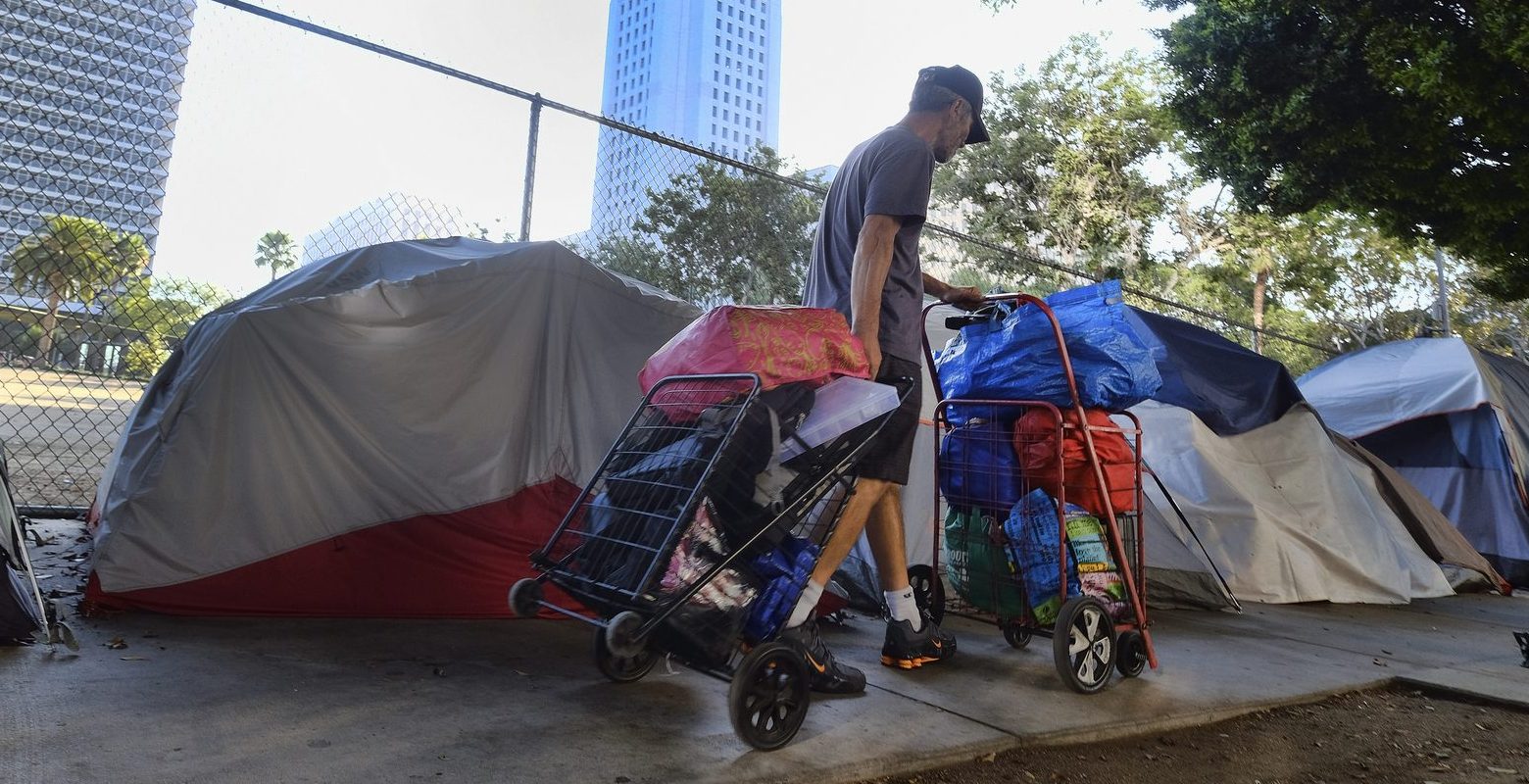
The immediate implication is dire: more than 1,200 New Yorkers face imminent loss of their homes; nationwide, that figure could swell to 70,000 or more. The city, facing a visible surge in tent encampments and shelter use, is ill-prepared for a further influx. Even before this development, its readiest solution to homelessness—emergency shelters—was buckling under demand. To secure affordable flats through lotteries or public housing now borders on the Sisyphean.
There are subtler, second-order effects as well. For families teetering on the brink, the evaporation of rental assistance is more than a bureaucratic footnote—it portends disrupted schooling for children, loss of employment for parents, and a knock-on burden on city agencies from hospitals to food pantries. The economic toll is not trivial: the city spends close to $1 billion a year running its shelter system. More homelessness, research suggests, means yet more outlays in policing, health, and lost productivity.
Landlords, too, have grown uneasy. The EHV vouchers, unlike their chronically underfunded Section 8 cousins, were for a brief time seen as relatively secure currency. Now the prospect of mass voucher expirations has sent shivers through property owners, especially those specialising in renting to low-income tenants. Their fears: rising arrears and, ultimately, units sitting empty or being converted to pricier market-rate rents.
A national malaise with local fallout
New York’s crisis is neither unique nor accidental. Across the country, cities from Los Angeles to Miami report that the sudden EHV shortfall arrived years before their housing authorities expected. Renters everywhere—already bearing the brunt of rising interest rates and anaemic wage growth—find the ground shifting further underfoot. The chasm between wages and the cost of shelter has rarely seemed wider: in some metros, a “cheap” flat now eats half a household’s income.
Though the origins of America’s housing malaise are long-standing—zoning strictures, NIMBY politics, and a lumbering construction sector—the pandemic exposed, and then intensified, pre-existing cracks. Policymakers in Washington, quick to deploy a one-off arsenal of pandemic stimulus, left little afterthought for sustainability. The temporary buying of time through generous subsidies, we now see, was exactly that: a purchase, rather than a solution.
International comparisons offer cold comfort. Other prosperous democracies—from Canada’s Vancouver to London—have battled galloping urban housing costs, but often cushion the blow through broader-based social housing and firmer controls on speculation. America’s patchwork of temporary vouchers, sporadic tenant protections, and immense bureaucracy is uniquely byzantine.
Can New York extricate itself, or at least muddle through? The classic tools—waiting lists, housing lotteries, incremental additions to the public-housing stock—no longer suffice. Yet the city has, in the past, shown a capacity for improvisation that eludes the federal government. Efforts have slowly gathered to legalise more multi-family dwellings, convert unused hotels into apartments, and coax private developers into pricing affordability units.
This latest acceleration of the rental crisis carries an unintended lesson. Safety nets cobbled together in crisis, we think, will always fray first and fastest. A serious solution would mean either generous new federal outlays—politically improbable in an election year—or structural reforms to the housing apparatus. Less grandiose, but more plausible, would be recalibrating existing voucher rules so that limited funds stretch further or flow to those at greatest risk.
For now, Mrs Smith and her cohort must navigate the city’s serpentine social-housing lottery, knowing full well that logic and probability are not on their side. As for landlords, some may opt to hold properties vacant in hope of a better class of tenant, thus perpetuating an irony at the heart of New York’s housing woe: a city full of homes that no one can afford to live in.
If there is a glimmer within the gloom, it lies in the quiet, unglamorous work of advocacy groups and some pragmatic city officials. Their experiments—however modest—in expanding supply and plugging funding gaps could, if scaled, offer a blueprint for other high-cost American cities facing the next inevitable housing bust. But absent boldness from Washington, all bets—and many leased apartments—are off. ■
Based on reporting from El Diario NY; additional analysis and context by Borough Brief.