MTA Teams With Columbia for $33 Million Uptown Elevator Upgrades, Accessibility Accelerates Systemwide
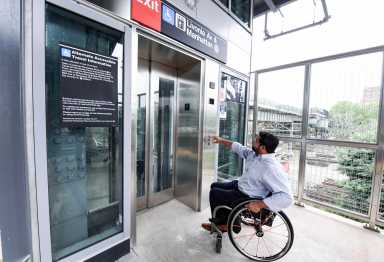
New public-private partnerships are accelerating subway accessibility in New York, reshaping mobility for millions of city dwellers and offering a test case for urban infrastructure delivery.
At rush hour, one can measure inconvenience by the number of strollers and wheelchairs stranded atop subway stairways. New York’s subway system, a century-old marvel, still leaves much of its population behind: as of 2019, fewer than a quarter of stations were accessible to riders with mobility impairments. The Metropolitan Transportation Authority (MTA), historically known for lethargic project delivery and surging budgets, now seeks salvation in an approach beloved by infrastructure optimists—public-private partnerships.
This month, the MTA trumpeted a deal with Columbia University to renovate the bustling 125th Street 1-train station in Manhattanville. The arrangement is unusual as New York transit deals go: Columbia, seeking better access for its swelling campus, will pony up $33 million towards construction. In return, the MTA will streamline delivery, folding accessibility upgrades—most notably, three new elevators—together with Columbia’s own expansion-driven needs. The goal is a unified set of works, completed more quickly and efficiently than if handled in isolation.
This is not the first such experiment. At Columbus Circle, one of Midtown’s busiest hubs, a newly opened elevator was both paid for and built by Global Holdings, a real estate developer. These efforts are not mere corporate altruism: businesses stand to benefit from higher footfall or improved facilities, and the city’s transit authority, perennially pressed for cash, is eager to accept help. For once, incentives align; the results, say MTA leaders, bode well for commuters.
At stake is not just convenience for the disabled, but the city’s economic mobility. As of 2024, over one million city residents—including parents negotiating strollers, delivery workers, tourists encumbered by luggage, and people with disabilities—are denied full use of the system’s labyrinth. Each new elevator or escalator promises both dignity and productivity: fewer missed shifts, broader job access, and a larger pool of potential employees for New York’s beleaguered service sector.
The distribution of these gains is uneven. New elevators at uptown stations are meaningful, but much of the boroughs remain badly served. Fresh MTA data counts 57 stations made accessible since 2020—more than in the prior decade combined—and another 40 stations in progress. Lofty targets abound: the agency’s 2025–2029 Capital Plan outlines accessibility upgrades at at least 60 additional subway stops, six commuter-rail hubs, and 45 elevator replacements. Should these ambitions survive capital politics and cost overruns, by the decade’s end some 272 stations—nearly 70% of the network by ridership—will be accessible.
Rethinking how to fix an aging subway
Critics, naturally, are not silenced by optimistic projections. Some complain P3s dilute public oversight, risking cost inflation, shoddy work, or lopsided deals favouring well-connected corporations. There are legitimate questions about equity: public-private projects often follow private capital—precisely where well-heeled institutions already benefit from premium real estate and urban amenities. Straphangers in the Bronx and eastern Queens—hardly bastions of elite investment—may be forgiven for wondering when their turn will come.
Yet the evidence, tepid though it is, suggests cause for measured optimism. Different cities offer lessons: London’s Crossrail, a costly but instructive P3, finally brought step-free access to long-neglected stations—albeit after years of delays. Madrid and Tokyo, where metro accessibility now exceeds 90%, mostly eschewed such partnerships for sustained public funding and technical project management. For New York, with its fiscal straitjacket and Byzantine procurement rules, merging private ambition with public need may be the only politically palatable route to progress.
Some institutional adaptation is visible. The MTA has retooled its Construction & Development arm to accelerate schedules, harmonize priorities, and cut costs. Unrealistic timelines and inflated budgets have dogged the agency in the past—who can forget the Second Avenue subway’s tortured gestation—yet recent accessibility projects show statistical improvement. By centralising project delivery, threading private funds where advantageous, and aligning station upgrades with outside development, authorities hope to halve both costs and construction time compared to the old regime.
Of course, a dash of scepticism is warranted. Large institutions are skilled at proclaiming “game changing” progress long before it is visible to commuters squinting for elevators through construction hoardings. Moreover, even 272 accessible stations will still leave over a hundred beyond the reach of New Yorkers with mobility needs. The effort is less a revolution than a long, tortuous trudge to adequacy.
National watchers show interest in New York’s improvisations. Across America, decrepit infrastructure and political paralysis hobble ambitions for universal access: Chicago, Boston, and San Francisco all wrestle with antiquated transit assets and rickety finances. The Federal Transit Administration, pondering how to stretch paltry dollars, eyes P3s as a promising if imperfect lever. Congress, meanwhile, lags the aspirations of ADA advocates, as calls mount for a new “moonshot” federal investment in public transport.
The lesson from New York may be unglamorous, but instructive. Donor-backed upgrades, when transparently governed and equitably distributed, can help break logjams—particularly when traditional funding is in short supply. Still, neither London’s successes nor Madrid’s discipline suggest that P3s are a panacea. Larger and more sustained public investments, coupled with institutional reform, remain essential if New York is to cross the threshold from accessibility as a privilege to accessibility as a norm.
Our view is cautious, if gently buoyant. Public-private partnerships can lubricate the gears of slow-moving public agencies, unleash pent-up investment, and nudge the city’s transit forward in increments if not bounds. But success will hinge on expanding ambition beyond showpiece stations and ensuring that New York’s less glamorous corners see tangible gains. Equity, after all, is not delivered by a single elevator or funding deal, but by sustained, citywide effort.
New York’s forty-year struggle to make its subway welcoming to all is not over, but its pace has quickened. The challenge will be to keep the momentum, and the money, on track. ■
Based on reporting from amNewYork; additional analysis and context by Borough Brief.