MTA Eyes State Funds for IBX Rail as Federal Support Wanes Under Trump
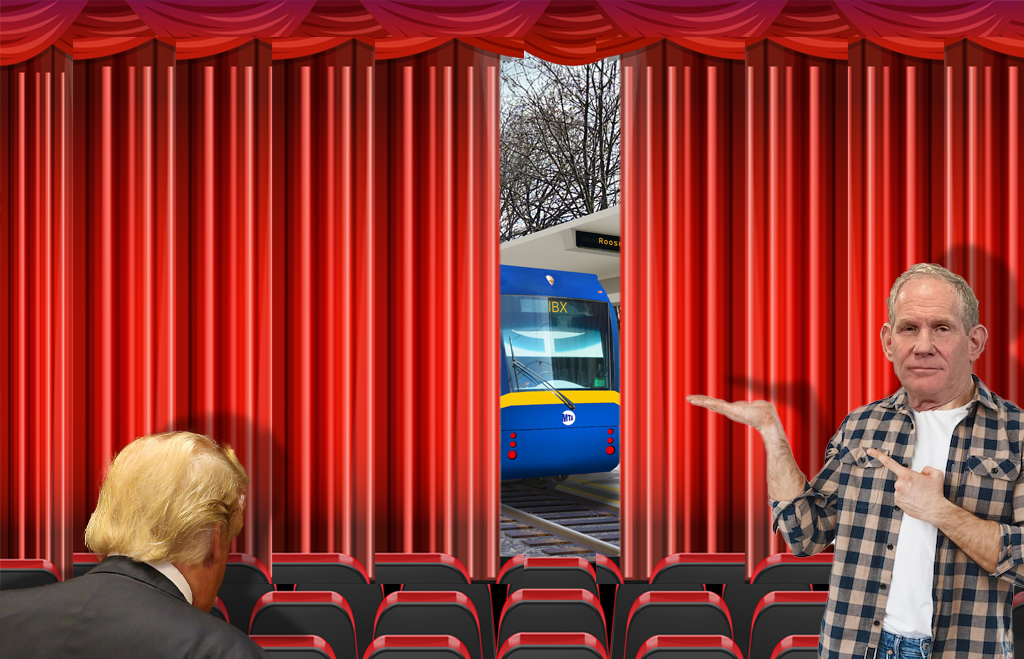
As the MTA explores funding New York City’s next great rail line without Washington’s help, the future of American urban infrastructure may hinge on political winds far removed from the tracks.
On an overcast Monday in Lower Manhattan, MTA Chairman Janno Lieber, not generally known for hyperbole, invoked Santa Claus to describe the prospect of unlocking federal funds for the Interborough Express (IBX). Even for New York, it was a moment of both dry wit and deep exasperation. The IBX, a $5.5 billion plan to stitch Brooklyn and Queens together via a light rail, may proceed without the largesse of Washington—an admission reflecting a chilly new reality for America’s largest city.
The specific cause for doubt lies on Pennsylvania Avenue. President Donald Trump, in his second act at the White House, has taken to scuttling New York’s recurring requests for federal transit money. This brand of presidential meddling—once decried as exceptional, now viewed as policy—has prompted MTA officials to examine alternative funding scenarios, lest the IBX join the swelling ledger of indefinitely delayed metropolitan dreams.
Until recently, ambitious projects like the IBX would have been all but guaranteed federal backing: a new rail service threading through tenacious stretches of working-class neighborhoods, promising to move up to 200,000 New Yorkers daily and connect them to 17 subway lines and 50-plus bus routes. The very sort of urban investment Washington’s New Deal descendants once prized. But today, the old assumptions have been upended by the prevailing winds in Washington.
It does not help that New York’s political clout has waned, battered by partisan divides and the outsized attention lavished on sunbelt swing states. The city’s officials, from Governor Hochul down, must now operate on a premise of what Lieber termed “optimistic realism”—eager to seek federal grants, but pragmatic enough to plan as if none will materialise.
The IBX has not lacked for momentum: since Governor Hochul announced her intention in 2022 to convert a lightly used 14-mile freight corridor from Sunset Park to Jackson Heights, the MTA has moved swiftly into design, engineering, and state-backed environmental review. Funding, however, is another matter entirely. A modest grant from the Biden administration covered early planning, but since then, the faucet has trickled to a halt.
The knock-on effects will reverberate beyond the city’s engineers. Brooklyn and Queens—whose residents endure some of the region’s longest cross-borough commutes—stand to lose out on jobs, connectivity, and countless hours if the IBX stalls. The economic case for the line is formidable: an injection of jobs in both construction and ongoing operation, bolstered real estate values, and, ultimately, greater regional productivity.
Yet the implications do not stop at trains and timetables. A city forced to go it alone on major infrastructure not only spends more, it often spends worse. Hobbled by the need to cobble together state and city cash for multi-billion-dollar ventures, New York’s officials must reckon with delays, expensive borrowing, and, above all, the risk that essential projects are downsized or indefinitely postponed. The IBX is not the only project at stake. Others, from the Penn Station remake to Gateway tunnel relaunches, depend on the same vanishing stream of federal money.
Nationally, New York’s conundrum is hardly unique. Cities like Los Angeles and Chicago also rely on federal formulas for their biggest projects. But New York’s predicament is particularly acute: the IBX would serve more riders than many entire urban rail networks elsewhere. The erosion of federal partnership marks a dramatic break with nearly a century of policy, reaching back to the 1930s when federal intervention in urban transit became routine.
The political motivations behind the current freeze are hardly subtle. Mr Trump’s affection for infrastructure has never quite extended to Democratic strongholds, and New York’s progressive leadership is a perennial foil. Perhaps he calculates that urban commuters are unlikely to feature in his coalition. Yet if New York must now build without robust federal aid, smaller, poorer cities can expect even less. The long-term result could be a patchwork of completed projects in red states, and vacant promises elsewhere.
A new model for metropolitan ambition
The MTA’s plan to proceed without federal funds, then, may well portend the broader future of American infrastructure: a return to local ingenuity out of federal necessity. In this emerging order, projects survive not on the merits of ridership or return on investment, but on the happenstance of partisan alignment and gubernatorial willpower.
It is doubtless tempting to treat this as parochial inconvenience. In truth, the costs will be national in scale. Delayed or diminished infrastructure in cities like New York bodes ill for American competitiveness; one cannot build a thriving 21st-century economy on crumbling, 20th-century tracks. Nor should taxpayers in Wyoming or Texas feel sanguine if Washington proves unreliable even for places as essential as New York.
Against this dismal tableau, we are mildly optimistic—not least because New York has been underestimated before. The city’s ability to adapt its funding models, including congestion pricing and bond issuances, remains real, if grudging. Moreover, the sheer logic of rail lines that dramatically shorten commutes for hundreds of thousands appears to override even the most fastidious political calculus in due course.
Still, the era when Washington led on infrastructure—and reliably funded it—appears to be waning. New York, girded by necessity, may soon become the test kitchen for local, even regional, infrastructure finance. Others will be watching closely. If the IBX opens, it may serve as much as a monument to urban resilience as to federal retreat.
The irony is as pungent as ever. The wealthiest, most populous American city, once the surest beneficiary of New Deal largesse, now waits for no Santa—only for its own hard-pressed taxpayers and long-suffering riders to foot the bill. Slow trains and slower politics have always plagued New York. Now, at least, the city is not waiting for a Christmas miracle. ■
Based on reporting from Streetsblog New York City; additional analysis and context by Borough Brief.