Microplastics Found in Major Baby Food Brands’ Pouches, Raising Packaging Questions for New York Parents
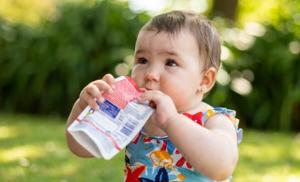
An alarming investigation into microplastics in baby food pouches heightens scrutiny of packaging and portends regulatory tremors for New York’s parents, businesses, and beyond.
A parent in Flatbush, reaching for an organic sweet-potato pouch, likely gives little thought to what else comes with each squeeze. Yet a new Greenpeace International investigation suggests that a baby’s first taste of solid food in New York may come spiked with thousands of microplastics per pouch. Tests commissioned by the group revealed as many as 11,000 plastic particles lurking in a single popular baby food product—an unsettling tally for caregivers who prize purity above all.
The study, summarized in the Greenpeace report “Tiny Plastics, Big Problem,” analyzed two leading baby food brands—whose combined sales account for roughly 40% of the global market. Both use flexible, spouted pouches now crowding store shelves in Park Slope, Jackson Heights and everywhere baby food is sold. The culprits were largely strands and shards of polyethylene, the material lining nearly all such pouches, as well as a medley of chemicals, including at least one notorious endocrine disruptor. Notably, the contamination occurred regardless of whether the product touted itself as organic or conventional—a disquieting signal for New York’s label-conscious parents.
For the city’s 8.3 million residents—and, more pointedly, its roughly 100,000 annual births—these findings land with the thud of a dropped diaper bag. Pediatricians warn that infants are especially susceptible: their blood-brain barriers and detoxification systems are still under construction, so even puny exposures may shape health trajectories decades hence. Endocrine disruptors and microplastics, once inside developing bodies, may not remain inert; evidence suggests links to metabolism issues, developmental delays and hindered reproductive health. With New York’s notoriously high standards for school readiness and child wellness, such risks give pause.
The implications ricochet far beyond kitchen counters. New York grocery chains stock ever more pouches, touting them as both convenient and, until now, safe. For city retailers and national brands alike, Greenpeace’s results are awkward at best and potentially costly at worst. If parents are frightened off plastic packaging, entire shelves—once a buoyant growth segment—face decline. The threat of lawsuits or regulatory clampdowns only magnifies the peril for food manufacturers.
Economically, this comes at an inopportune time. The city’s food retail sector is still grappling with post-pandemic supply chain woes and the pinch of inflation, with input prices creeping up faster than shoppers’ wages. A wave of parent-led demands for safer packaging could force companies into pricier glass or metal alternatives—adding further cost, weight, and fragility to products already buffeted by volatile demand. Moreover, New York’s robust advocacy community is apt to seize the issue as a lever for city- or even state-level legislation. After plastic straw and bag bans, plastic baby food pouches may soon be next in the firing line.
Nor are policymakers immune to the winds roiling these aisles. It is no accident that Greenpeace’s appeal falls at a moment of renewed vigour for the United Nations’ Global Plastics Treaty, now inching through the necessary diplomatic wrangling. Should such frameworks take effect, municipal governments—especially those as sprawling and regulatory-minded as New York’s—would likely be eager early adopters. The push for “extended producer responsibility” schemes and outright bans could become irresistible, with Albany and City Hall cast as activist guinea pigs. For multinational brands, compliance may soon require not only better packaging but entirely reimagined supply chains.
Globally, New York’s quandary is hardly unique. European regulators have already started tightening rules on food-contact plastics, often citing the outsized uncertainties facing small children. France, for instance, recently barred certain endocrine-disrupting chemicals outright; Germany has begun similar steps. Yet, if Americans are only now waking up to the microplastic menace, the trend points unmistakably toward stricter regulation and, perhaps, belated industry innovation.
How much plastic is too much?
Here, as so often, more data would help. The precise health effects of ingesting dozens—or thousands—of microplastic particles daily remain murky; epidemiological studies lag far behind sensational headlines. The chemical culprits identified—such as bisphenol derivatives or phthalates—are better understood after years of regulatory scrutiny, but conclusive evidence on the effects of microplastics themselves in infants is frustratingly thin. Still, as any risk manager knows, the toxicology deck is stacked against waiting for perfect certainty, especially when the stakes are toddlers’ brains.
It is tempting to dismiss activist studies as alarmist, particularly when packaged with polemic against fossil fuels. Yet it is equally naïve to ignore the steady drumbeat of disturbing findings: microplastics in human bloodstreams, in breast milk, embedded in lung tissue. Even if Greenpeace’s methods have yet to be peer reviewed, their warnings, in this instance, rhyme with mounting independent research worldwide.
For parents in Astoria or Crown Heights, the dilemma is familiar: organic jars and bulkier glass containers, or pouches that fit easily into strollers and backpacks but might quietly drip microplastics into growing bodies. Meanwhile, city officials—so practiced at balancing business interests with public health—may soon find themselves exploring creative nudges: tax incentives for safe packaging, investment in local glass manufacturing, and sharper disclosure standards.
In our view, the city would do well to avoid reflexive overreaction while still resisting industry foot-dragging. Voluntary corporate pledges are nice for annual reports, but they rarely spur change absent regulatory sinews. New Yorkers are the nation’s most vocal and best-organized shoppers; one suspects it will not take much more to shift market norms.
The path ahead looks untidy but, with luck, not hopeless. History suggests that when parents and policymakers set their minds to making food safer, industry adapts—even if it moans all the way to the bank. In the long shadow of this latest report, a quiet reckoning is coming to an aisle near you. ■
Based on reporting from www.qchron.com - RSS Results of type article; additional analysis and context by Borough Brief.