Manhattan’s 30th Street Shelter to Close for Repairs as Kips Bay Braces for Shuffle
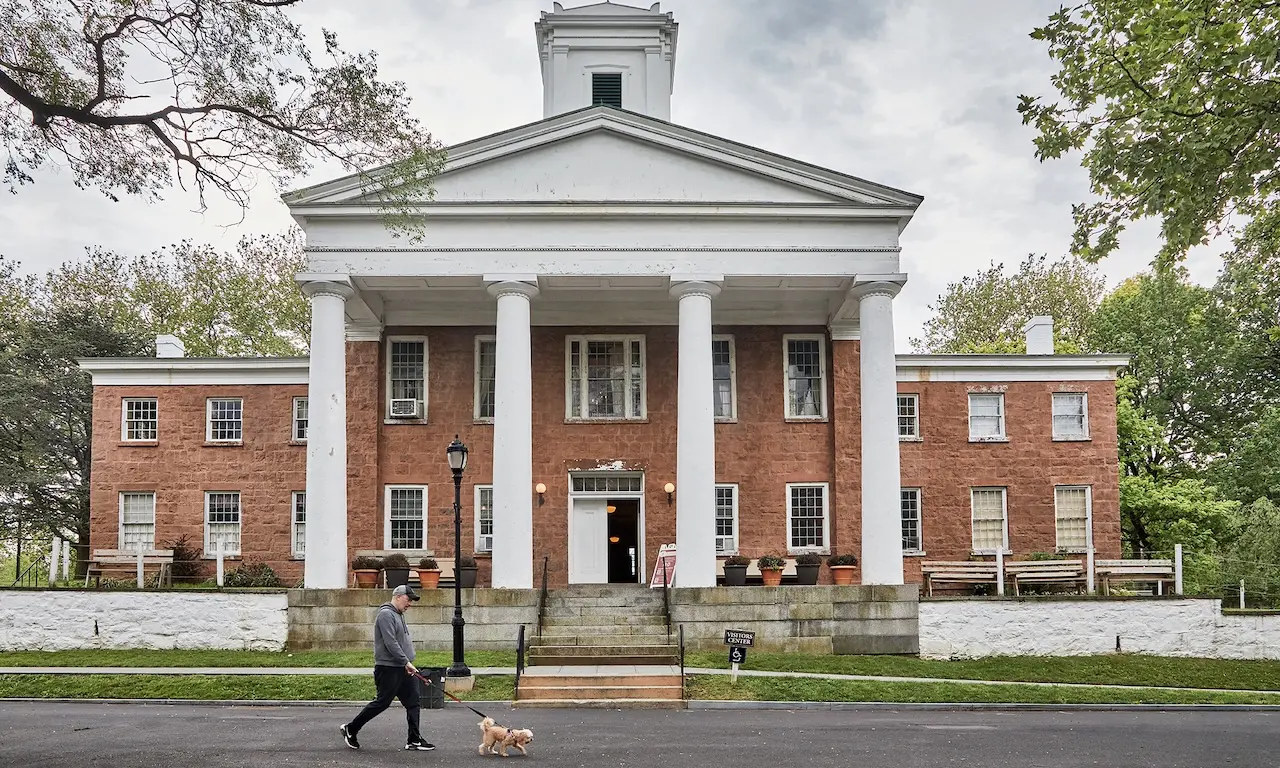
The closure of one of Manhattan’s oldest shelters exposes both the dereliction and delicate machinery of New York City’s beleaguered homeless safety net.
Shortly before dawn, men queue outside a hulking Depression-era brick building in Kips Bay, waiting to enter what has, for nearly a century, been the city’s main portal to shelter—a poignant daily scene soon to vanish. This week, Mayor Zohran Mamdani announced that the 30th Street Shelter, once the Bellevue Men’s Shelter, will shutter its doors at the end of April, citing “severe disrepair” as the decisive factor.
The building at 400 East 30th Street, first opened in 1931 with a capacious 850 beds, currently houses just 250 residents—its capacity whittled by crumbling infrastructure, persistent asbestos, and interruptions to vital services such as hot water. Its closure is a logistical feat: not only must its inhabitants be rehoused, but so too must the intake centre—New York’s primary “front door” for adult men requesting shelter—be transplanted across town.
The city, which has been forced by court mandate since 1979 to guarantee a bed for every homeless person who asks, now faces an uncomfortable recalibration. Residents will be distributed to other shelters across the five boroughs; intake functions will splinter between 8 East 3rd Street and 333 Bowery. Social Services agencies promise continued presence on East 30th Street for at least a year, a stopgap for confused new arrivals. But city officials and advocates alike bristle with anxiety over the potential for missed connections—and missed opportunities to intervene before hardship deepens.
If history is a guide, disruption bodes poorly. Both the Legal Aid Society and the Coalition for the Homeless, old hands at the city’s shelter battles, warn that even short-term confusion preceding the closure may ripple into greater instability for New York’s tens of thousands of unhoused. Though city hall touts forthcoming “high-quality shelters” across the five boroughs, concrete plans are as yet vague, and timelines elastic. With roughly 80,000 square feet of prime East Side real estate soon to be vacant, speculation over redevelopment or mere renovation adds to the uncertainty.
The practical implications are unsettling: the intake bottleneck, heretofore streamlined in Kips Bay, risks being replaced with a diffuse, potentially less efficient system; some fear this could drive more to remain in precarious encampments or to eschew services altogether. Coordination between city departments—Social Services, Homeless Services, housing agencies—faces new tests. The shelter population is at a record high, due not only to persistent local poverty, but also to an ongoing influx of asylum seekers, many reliant on city services for initial triage.
Second-order effects, as ever in New York, ripple across domains. Shelter closures rarely happen in splendid isolation; such a move will shape neighbouring property values, shift the geography of visible homelessness, and test not just city budgets but the patience of communities and advocates. The city must now balance the paltry housing options for the poor against rising demands from property developers and residents craving neighbourhood “improvement.” For city coffers already strained by pandemic costs and migrant waves, even a temporary reduction in available beds can mean higher emergency expenditures elsewhere.
The political dimension is equally fraught. Mayors are seldom rewarded for reforming, let alone disbanding, public shelters—especially with scant clarity on what will replace them. Mamdani’s vow to provide “safe, humane and truly livable” spaces reflects broad public sentiment, but also hedges: the phrase suggests a tacit admission that many city shelters currently fail this test. Should the transition produce queues or confusion, expect accusations of bureaucratic overreach, or—worse—of callousness.
Nationally, New York’s unique “right to shelter” sets it apart from cities like Los Angeles or Chicago, where large encampments have become de facto solutions, and where court orders to expand housing are met with political resistance. The city’s shelter system, though imperfect, forestalls some worst-case street scenarios. Yet its operational weaknesses—overcrowding, aging buildings, sluggish placement into permanent housing—are widespread in American cities. Even globally, mega-cities like London and Tokyo have yet to devise panaceas for rising homelessness amid unstable housing markets. The city’s attempt to rethink a core node in its safety net is thus illustrative, if not precedent-setting.
Fixing the machinery, not just the facade
Yet for all the outcry, it is hard to deny that the 30th Street Shelter was, in many respects, already lost. Allowing men to languish in an asbestos-riddled building with collapsing walls serves neither dignity nor stability. Its gradual decline portends a broader truth: that patchwork repairs, rather than substantial investment or reform, have become the default for much public infrastructure—especially for those out of sight and out of mind.
A properly functioning shelter system ought to do more than warehouse the unhoused; it should connect them to services, pathways to work, and, when possible, a permanent address. In this, the city has repeatedly stumbled, producing policies that are more reactive than strategic. The closure, then, offers a passable excuse—and a test—for whether New York can marshal the ambition and capital to replace decrepitude with genuine opportunity.
That will demand more than shifting beds across boroughs. It necessitates, too, a reckoning with bureaucratic fragmentation, a speedier pipeline to affordable housing, and a real commitment to “livable” space, not simply more square footage. Redevelopment of 400 East 30th brings temptation and risk: the lure of lucrative private redevelopment must be weighed against the city’s mandate to its least fortunate.
By the standards of other global metropolises, the city’s approach may still muddle through. But public patience—never bottomless—is flagging. Each missed appointment, each day of uncertainty, erodes confidence in the system itself.
In the end, the 30th Street Shelter’s demise may be less a tragedy than a long-awaited recognition that, for some institutions, the time to patch the roof or repoint the brickwork has long passed. The greater question is whether the city’s next attempt at housing its most vulnerable will prove more resilient, or will itself become tomorrow’s cautionary tale. ■
Based on reporting from Section Page News - Crain's New York Business; additional analysis and context by Borough Brief.