Mamdani Sides With City Council on Delivery Worker Bill, Amazon Allies Bus in Opposition
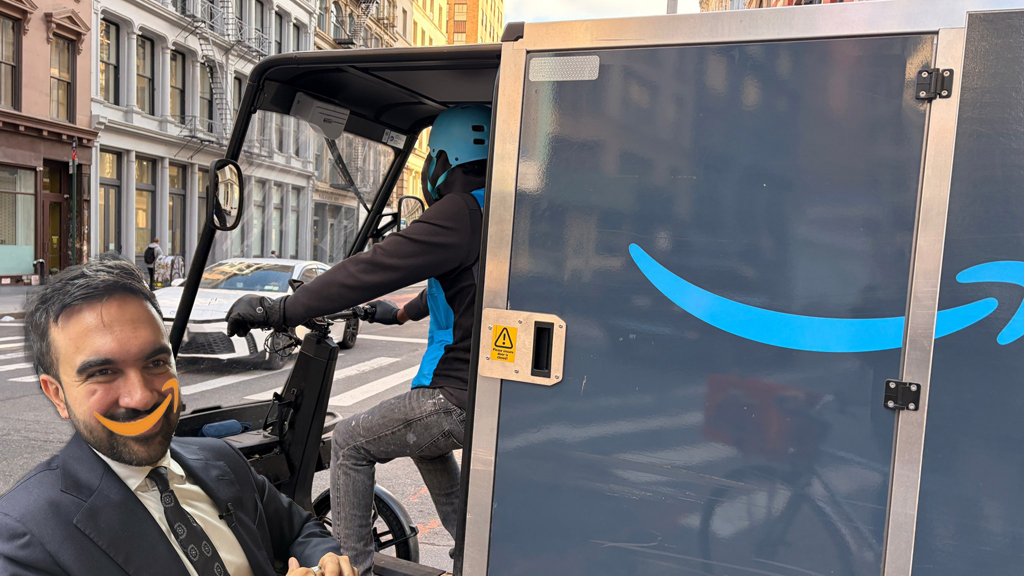
New York’s delivery workforce may soon face a dramatic shift in how they are hired and paid, challenging a lucrative subcontracting model that has altered city streets and labour markets alike.
Few sights portend the modern city’s contradictions more acutely than the convoys of Amazon-branded vans crowding the kerbs of Queens and the Bronx. These drivers, clad in corporate livery and hustling parcels on tight deadlines, do not technically work for the e-commerce colossus whose logo they bear. Instead, they are employed by a patchwork of third-party subcontractors in a system that keeps costs and liabilities at arm’s length—a structure facing a formidable challenge in New York City’s latest labour skirmish.
On Thursday, the Mamdani administration took a decisive stand, giving its blessing to the “delivery protection act” (Intro 518), a bill that would compel e-commerce firms to hire their drivers directly—a rebuke to the prevailing Delivery Service Partner (DSP) model. City Council members listened as the well-heeled coalition New York Delivers, a group bolstered by Amazon and local business chambers, packed testimony with opponents shuttled in via Uber vouchers. For a profession often marginalised, the choreography of this Capitol theatrics reveals the stakes involved.
The bill’s supporters, including unions and worker advocates, argue that subcontracts breed street chaos and hazardous conditions. Carlos Ortiz, chief of staff at the Department of Consumer and Worker Protection (DCWP), testified that offloading last-mile duties to third parties “externalizes costs, as well as liabilities.” This nebulous liability structure, critics say, has facilitated driver exploitation and left entire neighbourhoods to bear the externalities—chief among them peril on the roads.
Evidence appears to support the plaint. The city comptroller’s office observed a 10% spike in traffic accidents around 14 of the 18 latest last-mile warehouse sites, and more alarming surges in places like Maspeth, Queens, where crashes mushroomed by more than 50%. Rare is the van driver earning benefits, job security, or a sense of recourse if injured on the job or disciplined arbitrarily. For New Yorkers without the luxury of working from home, the menace of erratically parked, hurried delivery trucks is no theoretical nuisance.
If passed, the protection act could force a fundamental and costly reappraisal of the city’s logistics business. Mandatory direct employment would subject Amazon and peers to stricter wage, hour, and benefit requirements under state and federal law. While advocates reckon this will curtail abuses and bolster living standards, opponents—chiefly small DSP owners—characterise the measure as ruinous overreach. They contend that their thin margins will not absorb higher costs, and warn that job losses or exit from the city may follow.
The practical implications extend well beyond policy manuals and City Hall hearings. A change in hiring law would increase compliance costs for Amazon, likely squeezing out smaller third-party operators who lack economies of scale. Some drivers may see wages rise, while others could lose jobs if fewer delivery firms survive. Customers, in turn, might discover that same-day delivery loses some of its lustre—and its rock-bottom cost.
Nor do the economic ripples stop at paycheques and profit margins. Forced alignment of employer responsibility could usher in a new era for street safety. Amazon and its DSPs currently point to the necessity—and inevitability—of entrepreneurial flexibility in last-mile logistics. Yet in the city’s governance calculus, lives and livelihoods often trump abstract “flexibility,” and New York is unlikely to shrink from European-style regulation if convinced the streets are safer as a result.
Context matters. Nationally, the subcontracting model has insulated American e-commerce giants from many of the expensive class-action lawsuits and pressure campaigns that wrack their European counterparts. European regulators, notably in France and Germany, have moved to curb gig-economy abuses in a fashion that makes New York’s bill look almost timid. Stateside, California’s AB5 law attempted a similarly bold reset of gig employment, but its jury-rigged exemptions and messy rollout revealed both union muscle and the stubborn slipperiness of defining employment in the 21st-century service economy.
Direct employment or flexible subcontracts? The battle for last-mile delivery’s future
The city now stands at the crossroads of national trends. Amazon’s support for community business groups, from the Queens Chamber of Commerce to the Manhattan Chamber’s “Chairman’s Circle,” is hardly coincidental. By backing these local proxies, the tech behemoth has sought to manufacture grass-roots credibility and foster a pro-subcontracting coalition. Meanwhile, the administration—once ambivalent—has thrown its weight behind worker protections, elevating the debate from merely parochial squabble to a bellwether for American cities wrestling with gig labour’s externalities.
This would not be the first time New York led where Washington dithered. Nor is it unique in grappling with what economists call the “fissured workplace”—where accountability is diffused through networks of contractors and app-based ventures. But New York’s density, regulatory appetite, and unions’ enduring clout make it an especially potent proving ground. Other cities, from San Francisco to Boston, are watching with more than academic curiosity.
As ever, there is scant romance in legislative sausage-making. There is a risk that burdensome rules will stymie small businessholders or prompt enforcers to chase shadows, and the city’s penchant for well-meaning but ill-enforced edicts is well documented. But the status quo is surely unsustainable: increased accidents, low wages, and limited recourse for workers do not a civilised metropolis make. The DSP model may prove efficient for Amazon’s shareholders, but is less felicitous for the city’s air, roads, and working class.
Ultimately, the lesson is as old as urban commerce itself. Efficient delivery should not come at the expense of public safety or a race to the bottom for New York’s workforce. Even in a city famed for its hustle, there must be a baseline of fairness and transparency. If Amazon and fellow logistics giants wish to ply the city’s lucrative market, absorbing the true cost of the last mile is not too much to ask.
The outcome of Wednesday’s hearing and the administration’s endorsement will echo well beyond City Hall. Should the bill pass, New York may force Amazon to play by new rules of engagement—proving again that, at least sometimes, the city sets the pace for the nation. ■
Based on reporting from Streetsblog New York City; additional analysis and context by Borough Brief.