Mamdani Revives $21 Billion Sunnyside Yards Plan as Locals Weigh Housing Hopes Against Old Doubts
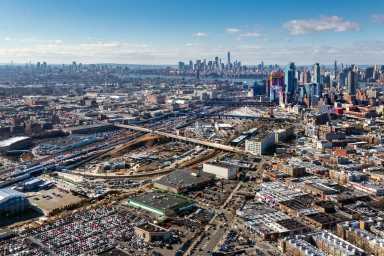
An ambitious plan to reanimate the Sunnyside Yards project tests New York’s appetite for big federal-state-city collaboration—and its ability to build affordable homes without inflaming old anxieties.
Few corners of New York City capture the optimism and dread of urban redevelopment like Sunnyside Yards. Sprawling, clanging, and long fenced off from dreams of transformation, the 180-acre expanse of steel just east of Manhattan has, for decades, invited visions as buoyant as they are controversial. Now, Mayor Zohran Mamdani has thrust it back into the spotlight, proposing a partnership with the Trump Administration that could change the city’s housing fortunes—or entrench old divisions.
On February 27th, Mamdani, whose progressive platform has not always nodded to compromise, stunned city-watchers by proposing a $21 billion scheme to deck over this railroad wasteland. The centrepiece is the creation of 12,000 new homes—half governed by the Mitchell-Lama program for middle-income families—plus parks, childcare hubs, and civic trimmings. The mayor’s announcement, coming within a day of a trip to Washington and a tete-a-tete with President Trump, signals both renewed federal attention and political daring. For once, New York’s famously fractious levels of government appear, if only fleetingly, to be tentatively aligned.
Opinions among local leaders arrive in shades of sceptical hope. Early social media reactions from Congresswoman Alexandria Ocasio-Cortez, who once withdrew from the project’s steering committee in protest, stopped short of outright endorsement but acknowledged the dire need for “transformational” investment. Her office praised Mamdani’s “level of investment,” though reminded all that genuine affordability, not symbolism, is the benchmark. Others were less diplomatic. Council Member Julie Won, in whose district the yards lie, acidly dubbed it a “failed housing project resurrected” and pointedly noted the lack of public approvals.
For New York City, the prospect of 12,000 new dwellings—6,000 of them below-market—cannot be shrugged off as mere grandstanding. The city faces a persistent housing shortfall, with vacancy rates for affordable units in the low single digits and median rents approaching $3,650 for even modest flats. A recent Citizens Housing & Planning Council report concluded that New York must add some 560,000 homes by 2030 simply to keep pace. Demand for subsidised housing, as seen in annual lotteries for new Mitchell-Lama and NYCHA units, routinely dwarfs supply by orders of magnitude.
If Sunnyside Yards moves forward (a sizeable “if”), it might not just ease some pressure: it could also catalyse a new model for cross-governmental collaboration. Federal partnership, particularly with a White House disinclined to lavish favours on Democratic city halls, is rare. Trump’s willingness to support a blue-state mega-project is, to say the least, surprising—though hardly unwelcome if the funds materialise as promised. City governments have cause to clutch every federal dollar tightly, given post-pandemic deficits and chronically underfunded infrastructure.
But mere units seldom guarantee tranquillity. Many New Yorkers recall the project’s earlier iteration—a 2019 plan engineered by the city’s Economic Development Corporation and Amtrak that crashed after grass-roots opposition. Critics warned that gentrification, not inclusion, would flourish. Worries abound that new towers will price out old neighbours, crowd creaking subway lines, and overburden schools and sewers already stretched thin. As Julie Won insisted, the city must pledge “a ULURP process with the Council and community”, a procedural nod to transparency and local control.
The local context is prickly. COVID-19 scuttled the 2019 vision before even a single pile was sunk, but the pandemic’s ensuing economic drag, and the city’s stall in new subsidised housing starts, have only amplified the urgency. While YIMBYism (the “Yes In My Back Yard” movement) is gaining adherents nationwide, New Yorkers still bear emotional scars from mega-projects that bulldozed communities for highways, public housing blocks, or flashy stadiums. Memories of the aborted Amazon HQ2 deal in nearby Long Island City, another project felled by coalition opposition, still smoulder.
Nationally, New York’s struggle over Sunnyside Yards echoes a larger American dilemma. The country’s major cities suffer varying degrees of housing drought, and local resistance to density too often trumps the evidence that high housing costs fuel both inequality and population flight. California, that lodestar of grand urban undertakings, recently passed a spate of state-level zoning reforms trying to force the hands of reluctant towns. But compared with global peers—Tokyo’s vertical suburbs, say, or Vienna’s public housing arcades—America’s record is tepid at best.
Between promise and peril
What sets Sunnyside Yards apart—if it escapes the long shadow of failed predecessors—is its explicit mix of deeply affordable rents, placemaking, and political symbolism. Mitchell-Lama, that much-praised (and lamented) mid-century vehicle for middle-income housing, is not perfect; past iterations suffered from income “creep,” unaffordable buyouts, and uneven maintenance. Yet as rent burdens climb, few New Yorkers would turn down more units at such income levels. Parks and childcare are nice—almost perfunctory in developer pitches—but without meaningful commitments on transit upgrades and anti-displacement measures, surrounding neighbourhoods may come to rue the project’s scale.
There is the added wild card of politics. With presidential election season looming and Trump’s own ties to Queens, sceptics wonder whether the deal is more posturing than policy. If Congress, especially its real-estate-averse House Republicans, balks or trims the purse, New York could be left with scaffolding, not homes. Mamdani’s own star rises and falls on his ability to wrangle local allies as well as national ones; a mayor too wedded to federal whims risks trading one form of paralysis for another.
Still, prudence suggests we take the proposal seriously. The scale is not gargantuan by international standards—London’s Barking Riverside and Sydney’s Barangaroo dwarf such plans—but for New York, starved for “shovel-ready” parcels and hemmed in by aged infrastructure, Sunnyside Yards offers rare opportunity. The project’s ultimate fate will hinge not just on the alchemy of funding and zoning, but on persuading nearby tenants, worried activists, and wary officials that this time, the city’s penchant for grandiosity serves the many, not the few.
For all the hand-wringing, the real question is whether New York can still build at scale for ordinary people. Sunnyside Yards, as revived by Mamdani, may not sweep away two generations’ worth of failed promises or cynical politicking. But, judiciously managed, it could provide a map—not just for more housing, but for the practice of governing an unruly city in partnership with an unpredictable federal government. For New Yorkers time and again left out of the city’s prosperity, that would be no small feat. ■
Based on reporting from QNS; additional analysis and context by Borough Brief.