Mamdani Courts Trump for $21 Billion Sunnyside Yard Housing Bet in Queens
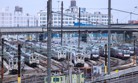
If revived, the mammoth Sunnyside Yard development could reshape both Queens and the politics of housing in New York City, entailing risks and rewards far beyond its rail tracks.
Standing on a sliver of raised ground beside the Sunnyside Yard—a roaring, 180-acre expanse of steel and rail slicing through western Queens—one can almost hear the ghosts of grand urban dreams past. It is here that Mayor Zohran Mamdani, freshly returned from Washington, hopes to raise a new city within the city: 12,000 units of affordable housing, a constellation of parks and clinics, and, perhaps, a symbol for a city forever in search of grandeur, and affordable homes.
The scheme, dormant since its pandemic-era shelving, suddenly stirred last week when Mr Mamdani pitched it to President Donald Trump in the Oval Office, seeking more than $21 billion in federal support. Emerging from the West Wing with cautious optimism, the mayor reported that Mr Trump “was into the idea”—a phrase that, by the standards of federal urban policy, is about as binding as a pinky swear. Yet a project that looked consigned to the sidings may once again be inching toward the main line.
To supporters, this revival is nothing short of historic. If it advances, the platform over Sunnyside could support not only thousands of homes—half of which would follow a Mitchell-Lama-style subsidized cooperative scheme—but also thousands of union construction jobs lured by the prospect of turning blank airspace into city blocks. The total would be the city’s largest housing and infrastructure investment in half a century, dwarfing attempts by Messrs de Blasio and Adams to nudge zoning or tinker with 421-a tax credits.
The implications for New York are significant. With the city’s housing stock trailing population growth by an estimated one million units, demand is pinching even the most ordinary renters. Buildable land, already puny by Manhattan’s standards, is a vanishing resource. The scale of Sunnyside Yard—a decked platform enveloping active Amtrak, LIRR, and NJ Transit tracks—offers what city planners call a “generational opportunity,” if one with all the charm and complexity of laying tracks atop a Rubik’s cube.
The city’s political establishment is more circumspect. Alexandria Ocasio-Cortez, whose district hugs the yard, once spurned predecessors’ overtures to deck the rails, calling past plans “deeply flawed.” Council and state legislative buy-in is far from assured; in New York, inertia too often masquerades as prudence. Community groups, already wary of development’s cheerleaders, remain to be convinced that “deep affordability” will outpace gentrification or displacement.
Technically, the project would strain even the most buccaneering developer. Engineering a platform above a churning terminal will require choreography between city hall, Amtrak (which owns the land), and a menagerie of state, local, and federal regulators. At $21 billion—and likely more after the city’s contractors have laced the budget with gold-threaded change orders—the proposal risks turning into another West Side Yard: costly, delayed, and laden with lawsuits.
Beyond the direct cost, the opportunity cost is palpable. Federal largesse of this magnitude could fund dozens of smaller projects citywide. Critics fret about the city’s all-too-familiar tendency to put eggs into gargantuan, politically fraught baskets, rather than more prosaically increasing as-of-right density through zoning reform. Still, few parcels match Sunnyside’s raw scale or proximity to transit.
The economic case is not trivial. Beyond new homes, Mamdani touts an infusion of 30,000 union jobs for builders, and longer-term gains as shops, schools, and healthcare facilities seed what could become Queens’ answer to Hudson Yards—minus the glassy soullessness, one hopes. Annemarie Gray of Open New York—a pro-housing advocacy group—hailed the mayor for prioritising supply-side solutions. Yet even boosters concede the scheme’s transformative promise is hostage to design choices (and future mayors’ zeal).
Nationally, Sunnyside is hardly unique. Chicago’s 78, Atlanta’s Gulch, and Philadelphia’s Schuylkill Yards each dangle visions of stitching over sunken railyards. The difference, as ever, is New York’s scale and ambition: only here do housing, infrastructure, and political theatre intermingle at such altitude. Internationally, one might cite Paris’s Rive Gauche or Tokyo’s Shibuya, where platforms over rail have yielded new neighbourhoods. Notably, most succeeded only after decades of patient investment and not inconsiderable public scepticism.
Globally, the impulse to build over rails answers both climate and housing imperatives—a way to densify without evicting current residents or paving over what little remains of urban green space. Yet such projects, if mismanaged, can become cautionary tales: inaccessible, sterile, or shunned by the very strivers they are supposed to serve.
Technical headaches are matched only by political ones
The biggest question may well be political, not engineering. Trump’s interest, as reported, is tantalising but ephemeral; federal politics is nothing if not fickle, and a White House signature can be as fleeting as a Queens sublet. With congressional appropriators, Amtrak trustees, and city pols each able to veto, the alignment needed to ignite Sunnyside’s engines could prove punishingly elusive.
Nor does urgency guarantee a clear path. The tightness of the city’s housing market, plus a national reckoning with affordability, bodes well for large-scale interventions. Still, the city’s troubled record—whether at Penn Station or New York’s long-delayed transit expansions—should caution against triumphalism. A project this size is as likely to spawn a decade of legal and budgetary wrangling as actual homes.
Yet, oddly, news that Sunnyside Yard might rise again is cause for guarded optimism. Either the spectre of housing scarcity has finally eroded the city’s allergy to big, disruptive endeavours, or it is merely another echo of New York’s chronic ambition: building, at last, what it has so often only dreamed.
Cautious as we must be, progress on Sunnyside Yard would signal that, on rare occasions, the city’s fractured politics and insatiable need for more space can actually converge for the public good. If Mr Mamdani can maneuver federal caprice, local wariness, and technical headache to raise thousands of homes from the rails, New York will have earned the right to boast. Until then, the idea remains, as ever, full of promise and peril—one more ambitious sketch on the city’s drawing board. ■
Based on reporting from City & State New York - All Content; additional analysis and context by Borough Brief.