LIC Lottery Opens for Orchard’s 248 Units, Affordable Now Means $2,912 Rent and Up
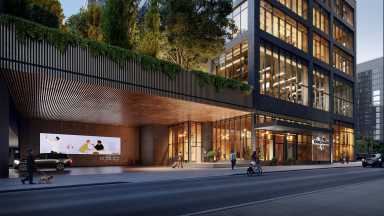
The latest Long Island City housing lottery exposes the shifting reality of “affordable” rents in America’s costliest metropolis.
The prospect of “winning” the right to pay $2,912 per month for a studio flat is a peculiar New York dream, and one now available to the thousands who will enter the city’s latest affordable housing lottery. The Orchard, a glassy, 70-story needle rising above Long Island City, Queens, has launched a lottery for 248 apartments priced for households earning about $105,000 to $261,000 a year. When completed, the building will lord it over Queens as its tallest, its penthouses and pickleball courts glinting like a promise—or a warning.
City officials hail the Orchard’s lottery as a step towards housing relief. In numbers, the offer is as follows: 81 studios, starting at $2,912 per month; one-bedrooms at $3,250 and up; two-bedrooms brushing $4,250; three-bedrooms for $4,925. Eligibility is for those with incomes at least 130% of the area median, the official “middle class.” Applicants must also have no more than $210,600 in assets. In a city where Gotham’s “affordable” is a byword for the implausible, this is nonetheless touted as a victory for inclusion.
The lottery will barely leave a dent. There are 824 apartments in the Orchard; only 248, or 30%, are reserved for the so-called income-restricted tier. The remainder will command purely market rates. For comparison, the average rent for a new lease in northwest Queens hit $3,797 in April, according to Douglas Elliman: a more expensive figure than in Houston or Chicago, but still (just) below the lottery’s priciest options.
For New York, every new unit helps—but these prices portend the fate of those locked out by the numbers game. According to the city’s own Housing and Vacancy Survey, half of all renters spend over 30% of their income on rent. The Orchard’s lottery, targeted at those far above the true median wage, leaves the city’s lower-income residents to scramble for scarcer, more crowded remains of the housing market.
The implications ripple across the city’s political and economic landscape. The housing lottery system has, for decades, provided constrained hope to otherwise unqualified hopefuls. Yet, as these offerings climb ever higher up the income ladder, they risk cementing a two-tier system—subsidised housing for the poorest and exclusive “affordable” options for the banally prosperous, with both groups living in buildings that increasingly resemble high-end hotels. In the era of remote work and capital flight, attempts to keep a “middle” in New York are not to be mocked. But whether they are enough is dubious.
For Long Island City, the Orchard raises the stakes. The neighbourhood, already awash in construction cranes, becomes a living experiment for the city’s high-density model. Do supervisory doormen and pickleball courts nudge out the bodegas and “mom-and-pop” businesses that gave Queens its 20th-century verve? Perhaps. But boosters note that new apartments create new customers and local tax revenues, potentially buoying local businesses—at least those able to survive the transition.
The city’s pillars, such as the Department of Housing Preservation and Development, claim their hands are tied: under current funding models, building new units at deep affordability remains near-impossible without state or federal support. The Orchard’s lottery emerges thus as a kind of compromise—a concession to the New Yorker who earns “too much” to qualify for most subsidies, yet “too little” for the luxury stratosphere. Critics reckon this tier is paltry relief for the genuinely needy, dubbing it “affordable in name only.” Defenders counter, not wholly without merit, that demand for rent-stabilized units at any price vastly outpaces supply.
Nationally, the phenomenon is hardly unique. Los Angeles’s latest “workforce housing” projects also target families earning well above local medians. In London, the average “affordable” home now means £450,000. In both contexts, policymakers walk a narrow ledge between political will, economic constraints and social expectations. New York’s perennial housing crunch highlights the way America’s most productive cities have stymied themselves through a lethal mix of tepid housing production, land-use stasis, and populist resistance to upzoning.
The squeeze on “middle” housing heightens urgency for deeper reform
Zooming out, one sees that such lotteries are not mere charity or public works. They are admissions of failure—of politics, of plans, of capacity. That rents of nearly $5,000 per month are deemed “affordable” by any official metric bodes ill not only for equity but also for the city’s future demographic mix. Absent more radical action—liberalized zoning, reversals of arcane community board vetoes, or greater fiscal support from Albany or Washington—New York risks fully pricing out the nurses and teachers who once animated its boroughs.
Yet we acknowledge the realities: inflation, construction costs, and the sheer weight of demand hamstring efforts at scale. Even in a banner year, the city rarely adds more than 30,000 units; population growth and household formation outpace this modest figure. If the Orchard is a beacon, it is a muted one, promising relief to a select few while leaving many to circle in vain for housing within reach.
What, then, should the city do? A classically liberal city would relax building restrictions, incentivising nimble infill and denser, taller construction in more neighbourhoods. It would experiment with cheaper materials and streamlined approval. There would be fewer lotteries and more competition among landlords for tenants. At the present, such changes look politically remote.
Until then, lotteries like the Orchard’s offer both symbolism and salve: a fleeting chance for the merely upper-middle-income to lock in a high-rise foothold amidst the squeeze. The unlucky masses, meanwhile, must look either for ever-pricier rentals, longer commutes, or, increasingly, the exits.
The Orchard’s lottery encapsulates the peculiar ironies—and policy paralysis—of New York life in the 2020s. We applaud every new unit, but it is a drop in an ever-deepening bucket. If this is the future of affordability, the city’s promise is being quietly, expensively, redefined. ■
Based on reporting from QNS; additional analysis and context by Borough Brief.