Levine Moves Fast to Make App Giants Mind the Rules—Bike Lanes, Too
As New York City tightens the screws on delivery app giants, its push to regulate gig work is quietly redrawing the contours of urban life and labour far beyond its own boroughs.
On a recent subzero Sunday in Brooklyn, delivery workers appeared to outnumber the hearty souls braving the frigid streets. As most New Yorkers stayed home, a silent army in reflective vests zipped along bike lanes, insulated against both the cold and the city’s relentless pace. Their ranks—estimated at 80,000 strong—have become as omnipresent as the apps fuelling their labours.
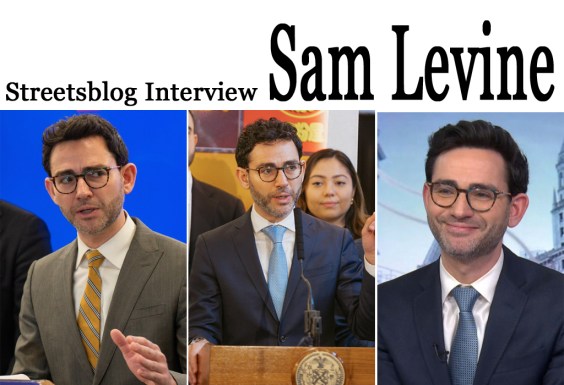
Into this teeming ecosystem steps Sam Levine, Mayor Azra Mamdani’s newly appointed Commissioner of the Department of Consumer and Worker Protection (DCWP). A recent veteran of the federal trade police, Levine has wasted no time. In a flurry of directives during his frenetic first month, DCWP has resumed enforcement of long-neglected cases and issued stern warnings to gig-economy titans: comply with New York’s newest labour rules—or expect a reckoning.
The focal point of Levine’s campaign is the burgeoning delivery app sector—think Instacart, Uber Eats, and their kin. As of January, city law requires these platforms to pay their couriers a minimum of $21.44 per hour, the highest such floor nationwide. Beyond wages, firms must offer customers a transparent tipping option, and provide bike couriers access to discounted e-bike programmes or trade-in schemes. Further changes, slated for early 2027, will make “at-will” termination by apps a relic; companies will need cause to cut loose workers.
The practicalities are daunting. Enforcement demands real resources—inspectors, legal staff, technology, and money—at a department already stretched by a vast remit. Levine’s team must corral multinational companies that have grown adept at circumventing local oversight, all while juggling consumer complaints, new rulemaking, and ceaseless lobbying from tech interests.
For New Yorkers, the stakes are tangible. On the surface, higher pay and basic benefits for deliveristas promise greater economic security for some of the city’s most precarious workers—many immigrants with little formal recourse. But there are trade-offs: app companies have threatened service reductions, surcharges, or greater automation in response to costs. Already, some food outlets report slimmer margins or higher prices as gig platforms pass on the expense.
Then there is the public realm. Delivery workers, on e-bikes and mopeds, increasingly shape the city’s infrastructure needs and its collective psyche. They zip along new bike lanes but sometimes spill onto sidewalks, raising the hackles of pedestrians and, occasionally, local politicians. The density and unpredictability of delivery traffic inject fresh complexity into debates over streetscape design and urban order.
Second-order effects radiate throughout the metropolis. The gig sector’s rapid expansion—fattened by pandemic-era demand—has strained not only traffic grids but also the city’s approach to social safety nets. DCWP’s efforts may compress the wage gap between gig workers and traditional employees, but many of the city’s 8.5 million residents may scarcely notice beyond their next lunch bill. How many will grumble at slower delivery times or fatter fees remains to be seen.
The regulatory thrust in New York echoes (and sometimes exceeds) pushes underway in California, Seattle, Toronto and beyond. American cities, long bastions of laissez-faire, are now experimenting with European-style interventions: wage boards, just-cause firing rules, and transparent algorithmic oversight. In June 2023, after California’s Prop 22 muddied the waters between contractor and employee status, New York lawmakers doubled down on crafting a sui generis model—one that treats gig work as worthy of minimum standards without collapsing companies’ workforce flexibility entirely.
Setting a precedent for urban gig regulation
Nationally, the Big Apple’s new regime portends a regulatory arms race. If New York holds the line—vindicating labor advocates without inflicting dire blows to service or business—a host of blue cities may emulate its approach. Conversely, should gig platforms scale back or automate en masse, policymakers elsewhere will take note. The Biden-era Federal Trade Commission, perhaps not coincidentally Levine’s alma mater, has itself floated new guidance on gig classification and worker rights. Globally, as urbanites from London to Lagos increasingly live at the mercy of algorithmic dispatch, municipal vanguards like New York function as test beds for democratic oversight.
Not all is smooth pedalling. Enforcement will require steady nerves and deeper pockets—a challenge in an era of tepid city revenues and fractious municipal budgets. History suggests well-meaning wage hikes can sometimes be offset by job churn or shadowy subcontracting, while rules about “just-cause” dismissal, though noble, can breed vexing disputes over what counts as fair. The tech giants, seasoned in regulatory arbitrage, will not always capitulate gracefully.
We are sceptically optimistic about the city’s gambit. The gig economy cannot reasonably remain a regulatory black hole while its denizens risk life, limb, and financial ruin to lubricate urban consumption. Yet nor should policymakers imagine that regulatory zeal can substitute for nimble adaptation; the delivery juggernaut, after all, exists because millions of New Yorkers demand its convenience. If Levine’s DCWP can balance these centrifugal forces—supporting vulnerable workers, upholding the public realm, and enforcing the law without stifling innovation—it will offer a data-rich blueprint for cities the world over.
The next few years in New York will test whether urban regulators can truly domesticate the wilds of the gig economy, or whether their efforts simply generate new forms of evasion and uncertainty. The city’s sprawling experiment is as much about reclaiming civic sovereignty as it is about paychecks or apps. Either way, the world is watching. ■
Based on reporting from Streetsblog New York City; additional analysis and context by Borough Brief.