Latino New Yorkers Sue Homeland Security Over ICE Arrests Made Without Warrants or Cause
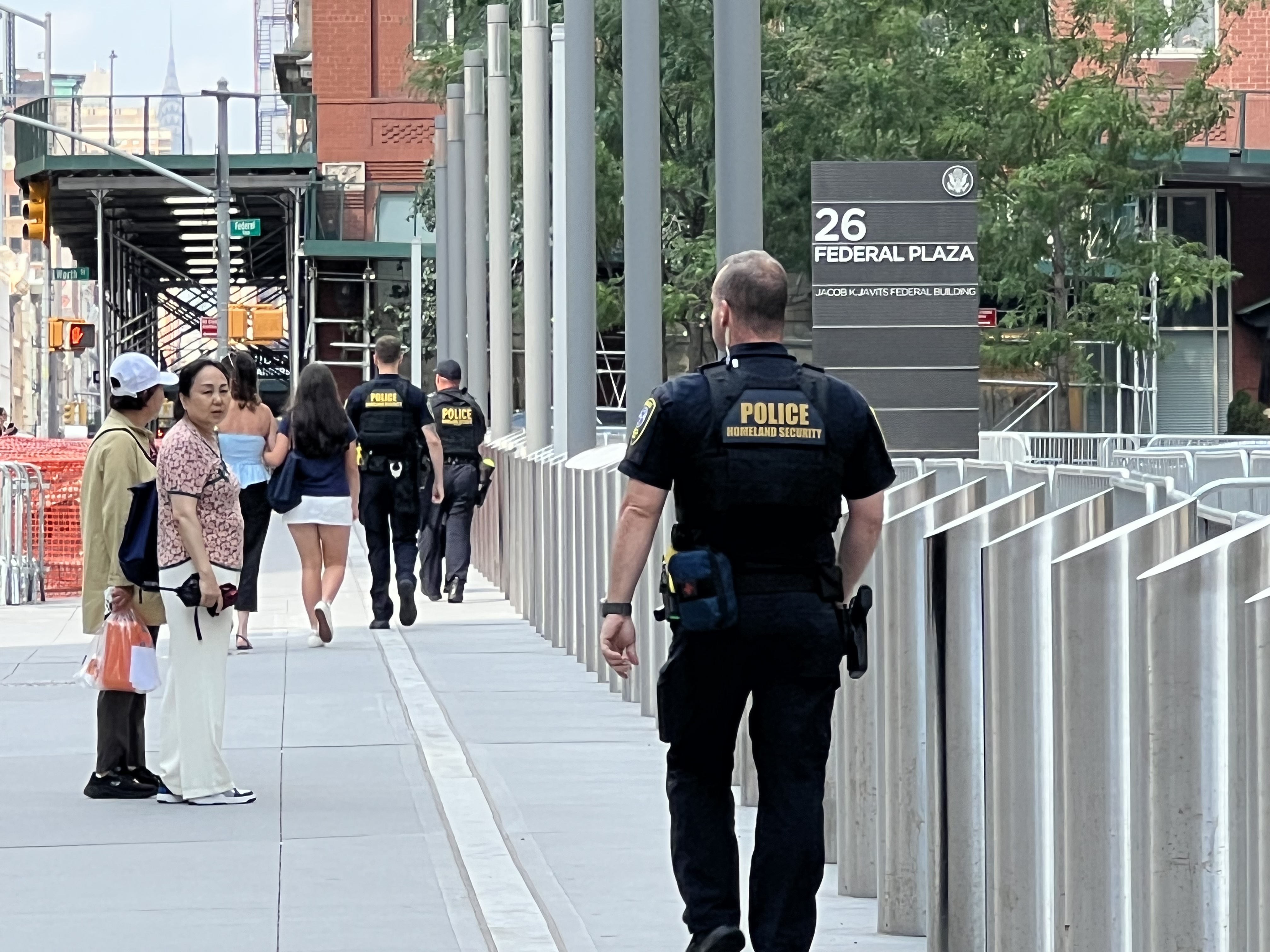
New Yorkers bring a class-action lawsuit alleging racial profiling and warrantless ICE arrests, spotlighting the uneasy balance between federal immigration enforcement and civil liberties.
At 7am on a brisk February morning, René Antonio Benitez was driving his teenage daughter to school in Brentwood, New York—a routine scene instantly upended by flashing lights from an unmarked sedan. Masked, armed men emerged, demanding identification. Within minutes, Mr Benitez, a 36-year-old father of two, found himself handcuffed and detained, not for any criminal act, but because he admitted, under questioning, to lacking immigration documents. No judicial warrant or local law enforcement was involved, only federal immigration agents operating under the auspices of the Department of Homeland Security (DHS).
Such stories no longer startle New York’s Latino communities. But the pattern they reveal—federal Immigration and Customs Enforcement (ICE) agents stopping individuals based mainly on “how they look” or perceived ethnicity—now faces a legal reckoning. This week, a coalition spearheaded by the Legal Aid Society, the New York Civil Liberties Union (NYCLU), and Make the Road New York filed suit in the US District Court for the Eastern District of New York, challenging what they allege is a policy of racial profiling and unlawful arrests by ICE and Customs and Border Protection (CBP).
Their class-action complaint, representing eight named Latino New Yorkers subjected to such encounters, contends that these agencies systematically detain individuals without warrants or probable cause—targeting people based solely on their appearance or language. As legal advocates put it, the agencies have “adopted a practice of arresting New Yorkers without any suspicion, based purely on their perceived race or ethnicity, as well as carrying out immigration arrests without judicial warrant and without probable cause”.
If granted class status, thousands who have experienced or fear such detentions could be represented. The groups argue that this not only contravenes constitutional protections against unreasonable searches and seizures, but also signals a troubling prioritisation of immigration crackdowns over civil liberties, particularly where those liberties are borne by people of colour.
For New York City, the implications of aggressive federal enforcement on local streets are as practical as they are symbolic. The city—home to nearly 3.2 million foreign-born residents, of whom an estimated 500,000 are undocumented—prides itself on “sanctuary” policies, seeking to shield immigrants from deportation machinery unless they commit serious crimes. But federal agents’ disregard for local protocols, advocates argue, threatens that equilibrium. Notably, the lawsuit alleges that ICE conducts raids and roadside stops on the flimsiest of pretexts, sometimes ensnaring legal residents or even citizens because they “look Latino”.
More broadly, the complaint exposes the clash between federal authority and municipal autonomy, a long-simmering legal and political struggle in American cities. When federal agents operate independently—eschewing judicial warrants, rebuffing city guidance—local officials find themselves unable to assure residents that the rule of law is being respected. The resultant fear erodes trust, making communities reticent to report crimes or cooperate with authorities, undermining the very public safety the government purports to defend.
The economic consequences are far from trivial. New York’s undocumented population represents a crucial slice of its workforce—driving cabs, building skyscrapers, staffing kitchens. Abrupt detentions disrupt families and businesses, chill consumer confidence, and threaten sectors dependent on immigrant labour. Even law-abiding legal immigrants may hesitate to access city services for fear of secondary scrutiny, draining the vibrancy from neighbourhoods otherwise buoyed by their contributions.
Politically, federal immigration enforcement actions in New York remain a useful cudgel, both for the White House—which touts deportations as a campaign promise kept—and for local officials, who decry them as an affront to urban self-governance. The current case, coming some fifteen months into Donald Trump’s return to the White House, crystallises the tension, and offers a vehicle to test the reach and limits of federal power in so-called sanctuary jurisdictions.
The contest for control: federal prerogative versus local will
Nationally, New York’s litigation joins a patchwork of legal challenges sprouting from Boston to Los Angeles, where immigrant-heavy metros object to the manner, if not always the fact, of federal enforcement. The alleged abuses—routine stops of individuals based on skin colour or Spanish accents, agents masked and armed conducting sweeps in neighbourhoods—have a vintage air, reminiscent of policing complaints from an earlier era. Legal precedents (such as Terry v. Ohio or Arizona v. United States) offer only incomplete guidance, as courts have long struggled to reconcile immigration law’s civil character with the procedural rigour demanded in criminal matters.
Abroad, one might compare New York’s immigrant policing to Paris’s banlieues or London’s post-Brexit scrutiny, where lines between legitimate border control and unwarranted profiling blur easily. In none of these places has brute-force enforcement yielded the boon to security or civic order promised by its proponents; if anything, the opposite has often proved true, deepening alienation and making underground economies more attractive.
For federal agencies, the temptation to cut corners—to substitute hunches about appearance for careful investigation—bodes ill both legally and practically. Lawsuits such as New York’s are likely to be expensive, slow-burning affairs. But for those subjected to summary stops or family break-ups, the psychic costs are immediate and severe.
We reckon that a city as irrepressible and diverse as New York stands ill-served by an enforcement ethos that privileges expedience over equity. Unchecked, federal raids undo years of careful bridge-building between local officials and immigrant communities. Should the courts find even partial merit in the allegations, the result may yet hobble the impunity with which federal agents now operate in America’s largest city.
The question remains whether a balance between national security and civil liberties can be struck, or if, as history too often suggests, the pendulum will continue to swing to the detriment of the vulnerable. So long as the flash of unmarked lights and masked agents’ demands persist on the city’s streets—not as exceptional acts but as routine practice—New York’s claim to be a refuge will face a searching test. ■
Based on reporting from El Diario NY; additional analysis and context by Borough Brief.