Hochul Drops 2030 Emissions Goal, Cites Costs as Albany Rethinks Climate Deadlines
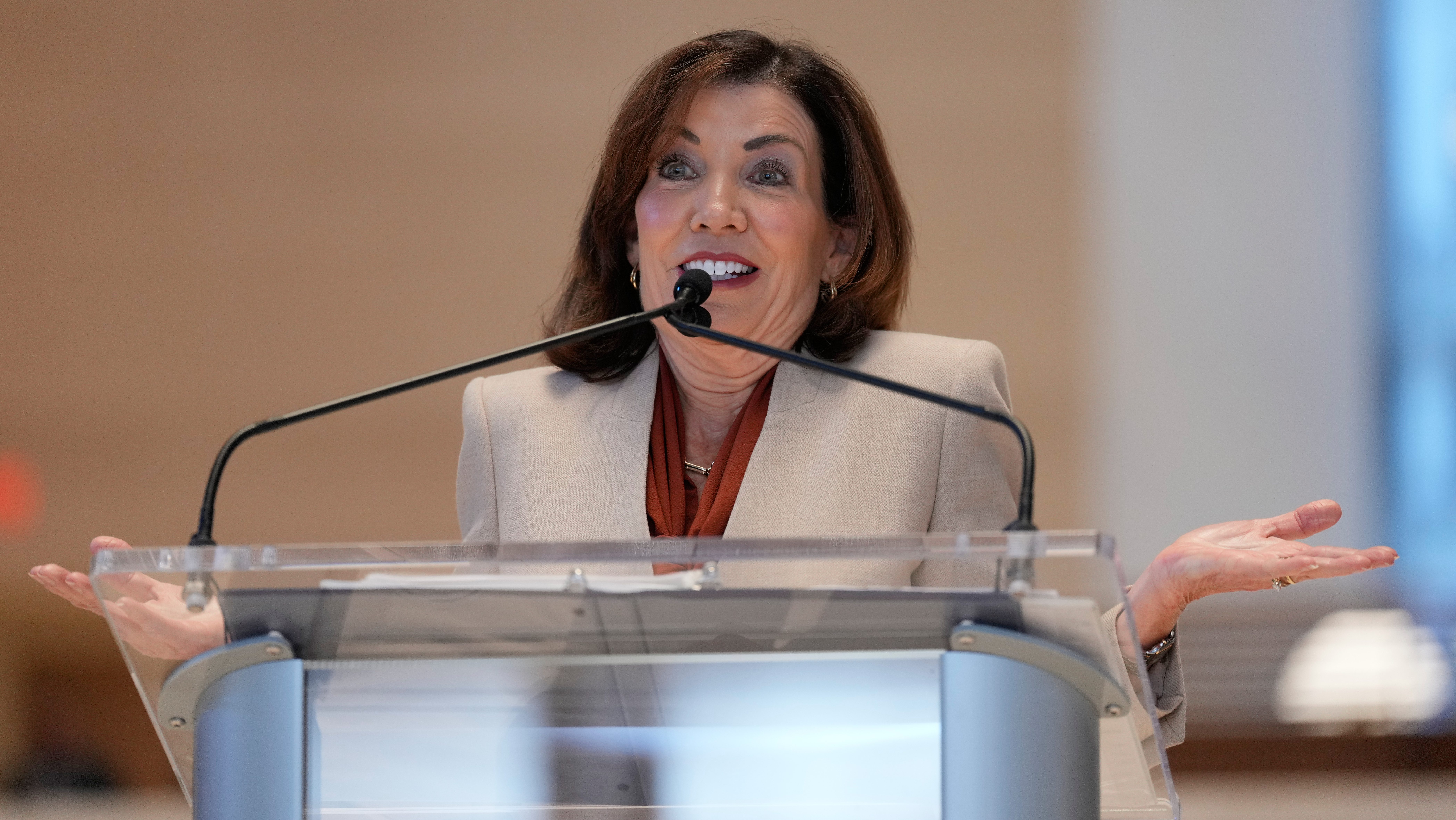
Governor Hochul’s move to water down New York’s world-leading climate mandates is provoking outrage among environmentalists and may yet reshape how cities nationwide balance ambition with economic reality.
New York is fond of unfurling big targets. Its 2019 climate law—calling for a 40% cut in greenhouse gas emissions by 2030 and 85% by 2050—cast the state (and its buoyant metropolis) as America’s lodestar for green ambition. Last week, Governor Kathy Hochul announced a dénouement that has sent green activists into conniptions: the short-term mandate is for the chop, replaced by softer, slower goals and a technical adjustment that makes hitting the remaining benchmarks markedly easier.
With a proposed $268bn state budget clinched after months of wrangling, Ms Hochul defended what her critics see as retreat. “New York has been a pioneer, and will continue to be, in clean energy and climate,” she declared. “But reality has been harsh. We cannot meet current deadlines without higher energy costs. The facts are clear, and I cannot allow that to happen.” The carve-out means the 2030 deadline is scrapped; instead, New York aims for a 60% reduction by 2040. The 2050 target of 85% stays put—on paper, at least.
She also announced the state would switch to a more forgiving 100-year metric for judging the warming power of emissions, rather than the former 20-year time-frame. This scientific fine-tuning has outsized political ramifications. It recasts methane—a potent but short-lived greenhouse gas—as less menacing, letting New York’s carbon arithmetic appear less dire than advocates contend. Overnight, progress seems to leap ahead, not because emissions fell, but because the clock moved.
Local environmentalists, whiplashed by the volte-face, are not amused. Stefan Edel, spearheading the NY Renews coalition that midwifed the 2019 legislation, accused Ms Hochul of “forcing through an anti-scientific change to the law in a profoundly undemocratic way.” He called it a betrayal, coming just months after Time magazine feted the governor as a global climate leader.
The “historic” law promised not only to curb emissions, but to redraw the relationship between the state, business, and city dwellers. For New York City, where high-rise heating, beleaguered subway cars, and grid congestion are daily fare, the delay shifts a welter of near-term scripts. Groundbreaking “cap-and-invest” programmes—requiring heavy emitters to buy credits or curb pollution—emerge more slowly. Progress towards renewable rooftops, electrified buses, and cleaner air in working-class neighborhoods risks languishing.
Some union leaders and business lobbies, less besotted with original deadlines, are relieved. After all, the costs of a hasty green transition were destined to fall unevenly: higher electricity bills, uncertain job security for fossil-fuel workers, and upfront investments that many landlords and small businesses would struggle to shoulder. By stretching timelines, Ms Hochul bet that the political blow would be less severe than the potential for gnarled implementation, ratepayer revolt, or industrial flight.
Yet the second-order effects are more ambiguous. New York’s previous targets anchored long-term investments: wind farms off Long Island, solar panel supply chains, and a nascent green-jobs market. By shifting the goalposts, the governor injects uncertainty—possibly raising borrowing costs and slowing deal flow. If city agencies adjust procurement plans, and carbon-credit markets wilt on the vine, the urban green transition may lose momentum.
At stake, too, is the state’s claim to national leadership. After 2019, Albany’s law was copy-pasted by California and eyed by Washington as a template for federal targets. Now, New York risks relegation to the second tier of climate ambition. Nationally, the wrangling mirrors a broader reckoning as politicians—Democratic and Republican alike—discover that selling green dreams is easier than paying for them.
A shifting climate for climate law
Neither New York nor its peers face easy choices. Nobel-winning economists reckon that rapid decarbonisation, while ultimately cost-saving, requires big upfront outlays and deft navigation of “just transitions” for vulnerable communities. The trade-offs often go unmentioned in grandstanding press conferences. Ms Hochul, though she has earned brickbats from the left, is not exactly a climate troglodyte: she preserved the 2050 goal and continues to back offshore wind and electrification schemes, albeit at a slower clip.
Meanwhile, the city’s political landscape is changing. A restive electorate, feeling the pinch of cost-of-living increases and tepid wage gains, has grown more sceptical of promises that seem to threaten wallets more than wildfires. Nationally, President Biden’s own climate package, passed in 2022, underwrites some green spending but mostly through market incentives and tax breaks—a tacit admission that outright mandates are hard to sustain. New Yorkers, never slow to find reasons for complaint, seem divided: a recent Siena poll found support for climate action, but plummeting enthusiasm for policies that increase everyday bills.
Globally, New York’s softening stance carries a message for other climate trailblazers. Even in wealthy, progressive cities, the balancing act between ambition and realism is delicate. Europe’s own experience with soaring energy prices and yellow-vest protests has made climate deadlines politically perilous. China and India, much further behind in per-capita emissions cuts, watch such quibbles with evident schadenfreude.
There is, in all this, a whiff of wry inevitability. Targets are easy for politicians; execution is another matter. The clever switch from a 20-year to a 100-year emissions horizon allows Ms Hochul to claim progress while buying time—a tactic as old as politics itself. Yet repeated recalibration risks eroding public faith in the possibility, let alone the utility, of sweeping state action on the climate.
Nevertheless, if the city’s history is any guide, progress rarely follows a straight line. The forces reshaping the urban landscape—demographic churn, technological leaps, sheer cussedness—mean that temporary setbacks rarely bode permanent retreat. What matters is whether the city, and the state, can preserve credibility and nudge forward investment, even as the letter of the law shifts.
For all the exasperation in green circles, New Yorkers might quietly recognise the logic behind pause and adjustment. Better, perhaps, to admit limits than to plough heedlessly into a gnarled policy mess that disillusions supporters and enlivens cynics. Yet ambition deferred is easily ambition abandoned. We reckon that the city, and its restless residents, will judge politicians less by the goals they set than by the results they deliver. ■
Based on reporting from El Diario NY; additional analysis and context by Borough Brief.