FBI Locks Down Torrance Home After White House Correspondents’ Dinner Shooting Shakes Coast-to-Coast Nerves
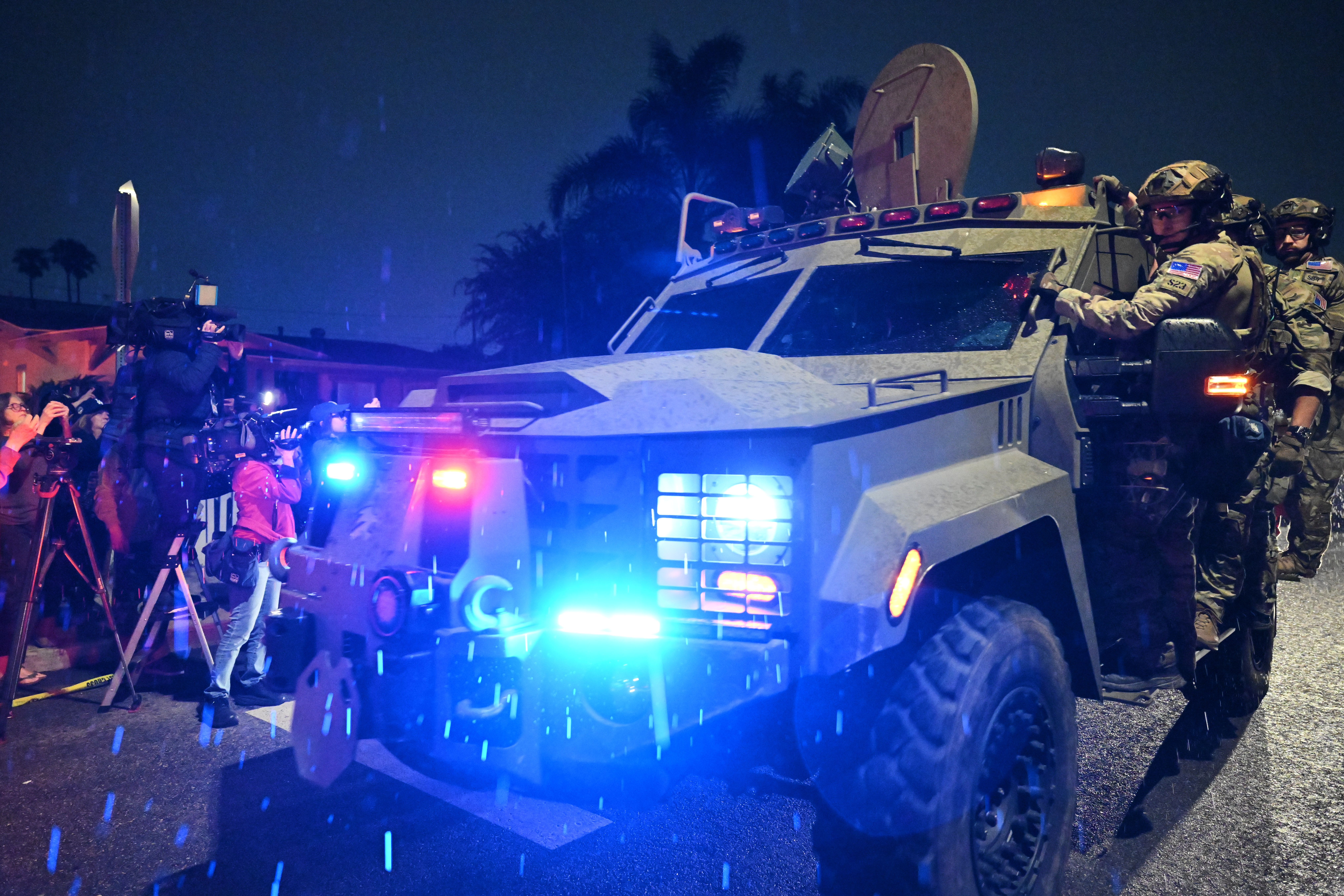
An attempted shooting at a high-profile Washington gathering is felt far beyond the Beltway, raising persistent questions about security, political violence, and New York’s standing amid a fractious national mood.
When shots rang out at the White House Correspondents’ Dinner, where both President Donald Trump and his inner circle mingled freely with Washington’s media and political elite, the spectacle quickly became a national drama. A Secret Service agent suffered a bullet wound, and the festive clatter of cutlery dissolved into panic. For many New Yorkers, the disturbance seemed at once distant and uncomfortably familiar—a potent reminder of the city’s perennial entanglement with America’s political crosswinds.
The arrested suspect, Tomas Cole Allen, 31, of Torrance, California, was subdued and taken into custody at the event venue, a hotel in Washington, before he could breach the security cordon protecting the president. As of this writing, the Federal Bureau of Investigation maintains a wary vigil surrounding Allen’s residence in California, awaiting a federal search order. Federal prosecutors have charged him with felonious possession of firearms and assault, the gravest accusations short of an actual assassination attempt.
The incident—though swiftly contained—has prompted city, state, and federal officials to re-examine protocols for high-profile gatherings, particularly those attended by national figures. New York City, whose own calendar brims with ribbon-cuttings, United Nations summits, and campaign galas, is already no stranger to such threats. Each time the national temperature rises, so too do the stakes for policing such events in a city that considers itself the nation’s unofficial capital.
The mayor of Torrance, George K. Chen, offered the customary notes of condemnation—denouncing political violence and vowing to uphold “respect, diversity, and public safety.” Such declarations may sound routine, but they point to the delicate balancing act now required across American cities. In an era of fractious identity politics and increased incidents of what bureaucrats term “lone-wolf” violence, the boundaries between personal grievances and national spectacle blur uncomfortably.
This latest lapse was, by most measures, a near-miss. The Secret Service, long adept at projecting unflappable calm, was forced into what its deputy director, Matthey Quinn, called a confrontation with “a coward [who] attempted to create a national tragedy.” President Trump, ever eager to shape the narrative, described the assailant as “sick” and a “lone wolf.” Yet such platitudes offer cold comfort to local officials charged with the day-to-day safety of crowds and public figures.
For New York, the most obvious implication is a renewed urgency for reevaluating counterterror protocols. The city’s police, already stretched thin by demonstrations and a summer uptick in shootings, now face additional scrutiny around coordination with federal agencies. The Metropolitan Transit Authority and NYPD recently rolled out “invisible” layers of security—plainclothes patrols and sudden checkpoint drills at major landmarks—while City Hall convenes regular, if often perfunctory, briefings on mass event safety.
The economic penalties can be both immediate and subtle. New York’s events industry, a $35 billion annual juggernaut spanning everything from fashion weeks to political fundraisers, remains peculiarly vulnerable to a single security scare. Should perceptions of heightened risk persist, insurers may ratchet up premiums, event planners might shun more public venues for private halls, and hotels—so integral to the city’s recovery post-pandemic—could see jittery cancellations.
Political costs are harder to measure but potentially more corrosive. For many New Yorkers, especially immigrants recalling distant civil conflicts, each new headline of political gunfire underscores the vulnerability of American institutions. Elected officials know that even an abortive attack invites both opportunistic grandstanding and genuine rethinking of how politics is practiced. This could portend a chillier, more fortress-like atmosphere at everything from future Met Galas to neighborhood rallies.
History repeats itself on a bigger stage
Nor is this a parochial concern. The United States now registers several hundred mass shootings per year, and while not all are politically motivated, their frequency gnaws at the shared belief in public order. European capitals, seasoned by their own traumas, have long deployed layered security for public officials, but the American reliance on spectacle leaves wide gaps. The White House Correspondents’ Dinner, once lampooned as a glitzy soirée for Beltway insiders, now emerges as a symbol of a society unsure where entertainment ends and peril begins.
International observers, accustomed to tales of American exceptionalism, will note the irony: a country that guards its leaders with a phalanx only to see gun violence infiltrate even the most exclusive rooms. New York, ever cosmopolitan, is both closer to and further from Washington than geography suggests; its anxieties mirror national trends but play out with the added weight of density, inequality, and a ceaseless churn of protest and headline-grabbing events.
What lessons, then, are to be drawn from this latest brush with disaster? The machinery of state—FBI cordons, federal arrest warrants, all the somber apparatus—functioned with competence but not prescience. The attacker breached neither the president’s physical defenses nor, in the end, the broader public’s sense of normalcy. Still, the bullet wounds, both tangible and psychological, persist in a city for whom the abnormal is increasingly routine.
In typical New York fashion, the conversation will pivot: some will see a call for more restrictions, others for more openness, and all will debate whether security should come at the price of civic engagement. The answer, as ever, is unsatisfying—a muddle of vigilance and resilience. While the spectacle of panic at a Washington gala may soon recede from the news, its implications will ripple across New York’s boardrooms and borough halls for some time yet.
Ours remains a city that trades in optimism—with a jaded eye on the ledgers and a sharp ear for discord. The lesson, perhaps, is not that paranoia must rule, but that complacency cannot. The next errant gunman may not be so easily thwarted. ■
Based on reporting from El Diario NY; additional analysis and context by Borough Brief.