DSNY Rolls Out Snow Strategy for 2026 as Queens Preps for This Weekend’s Storm
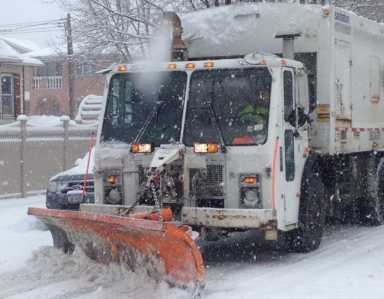
As winter storms grow less predictable, New York City’s well-oiled snow removal machine faces new scrutiny over cost, labour, and resilience in a changing climate.
Few things grind New York City to a halt like snow. When the white stuff begins to blanket Queens—up to seven inches are expected this weekend—memories resurface of past storms that brought even the city’s bustling arteries to a crawl. The prospect of transport stranded, businesses shuttered, and once-unstoppable commuters stuck at home portends no small disruption, even in a metropolis famed for soldiering on.
This week, Queens Borough President Donovan Richards hosted city officials to unveil New York’s snow clearance blueprints for fiscal 2026. The briefing, led by Antonio Whitaker, assistant director at the Department of Sanitation (DSNY), was part of the city’s annual rite: an early-winter summit meant to reassure both the public and local authorities that New York is braced for whatever the skies may send. The cast included not only DSNY but also the Department of Transportation, Parks and Recreation, and the Metropolitan Transportation Authority (MTA)—every agency with a shovel in the fight.
The choreography is more complex than first appears. DSNY clears over 19,000 lane-miles of city streets—enough to stretch from Times Square to Timbuktu and back—while the transportation department minds expressways and municipal lots. The MTA, perennial lifeblood of urban movement, is charged with keeping subway tracks and platforms passable. Parks staff, meanwhile, tackle public pathways. For pavement abutting city parks, 311 complaints serve as an unlikely conduit from disgruntled strollers to municipal salt trucks.
Should the snow persist past four inches, the city taps a reserve army of emergency snow shovelers. The gig pays $19.14 per hour—or a more enticing $28.71 for overtime. Recruitment is open online; the only qualifications, physical stamina and a willingness to brave chaos for modest reward. This “citizen shovel brigade” is New York’s answer to the perennial shortfall of able bodies amid the blizzard.
More than manpower is required. The city keeps on standby a fleet of over 2,000 vehicles fitted for both plowing and salting, an arsenal grown by 15% since 2022. These are not specialist snow machines but everyday rubbish carts, armor-plated for battle. Over 700 spreaders and a mountainous 700 million pounds of salt are stockpiled for icy emergencies; paradoxically, this is now a year-round commitment. Snow preparedness is planned in the dog days of July, as workers quietly audit 1,500 snow routes and management pores over ceaseless meteorological feeds from AccuWeather, CompuWeather, and Metro Weather.
Despite all this readiness, storms rarely unfurl by script. NYC’s response teams operate three rotating 8-hour shifts, quickly pivoting to two 12-hour cycles for major events. The aim is unceasing coverage: every inch of road checked, every forecast double-guessed, every possible resource earmarked. Yet, every winter, citizens still grumble about uncleared corners or mysterious frozen pockets that outlast the first week of melt.
All this snowfighting comes at no paltry price. Storm response can cost New York upwards of $1.8 million per inch of snowfall, depending on its severity, duration, and the stickiness of the crust left behind. Overtime for sanitation workers alone runs into the tens of millions. Labour unions, naturally, eye each bout as a test of both working conditions and city resolve to honour contracts struck in warmer months. The occasional accusations surface—sometimes with cause—of missed routes in outlying boroughs or slower response in less affluent districts.
Economic implications creep beyond municipal ledgers. When blizzards snarl transit, even for a day, the city’s GDP takes a hit: economists estimate a major storm can cost the region $152 million daily in lost productivity. Absenteeism rises, deliveries stall, shops miss out on foot traffic. For hourly workers and small business owners, lost shifts accumulate into a wintry toll. Not surprisingly, the question of whether the city’s investment in storm preparedness yields a net societal benefit is never far from policymakers’ minds.
New York’s struggles are hardly unique. Chicago, Toronto, and Boston duel with similar logistics and similar sceptics, albeit with different blends of snow-removal machinery and public expectation. Yet, as climate change renders storms less predictable—flurries one year, record drifts the next—planners elsewhere are keenly watching how the world’s largest city adapts its ancient routines to a less certain future. Some European metropolises, arguing that grit trumps salt, allow snow to accumulate so long as main roads stay navigable, trading safety for parsimony.
Shoveling toward a changing future
For all the hyperbole about New Yorkers’ fabled resilience, the city’s snow plan is rooted in unsentimental arithmetic. Back-ups on bus routes and subway disruptions are not mere nuisances but threaten the city’s raison d’être: the uninterrupted circulation of millions. Technology helps—GPS-tracked plows and public snow dashboards—but brute force and institutional memory still carry the day.
There remain questions, however, about equity and sustainability. Critics note that low-income neighbourhoods sometimes receive slower service, and that mountains of salt, while effective, carry their own environmental toll. Calls for innovation—alternative de-icers, dedicated light plows, better communication with the public—spring up every season, only to fade as the spring thaw returns. The city’s limited willingness to experiment reflects a gambler’s logic: a single catastrophic failure could cost more, politically and financially, than the aggregate efficiencies extracted from riskier change.
Meanwhile, for thousands, the humble snow shoveler program offers a transient buffer against economic precarity. The city’s recruitment drive, with its hourly wage, is both a safety net and a signal. But it is also a reminder that for all the millions spent, the heart of New York’s snow resilience remains blunt labour—a feature not a bug.
We reckon New York’s blizzard battle is far from foolproof, but not for want of effort or organisational bravura. It is costly, labour–intensive, and—at times—inelegant. Yet, barring radical technological leaps or climatic miracles, no city can shovel its way out of winter. For now, the snow plan is mostly about buying the time to get back to business as soon as the sun reappears. Even in a city obsessed with speed, learning to live on winter’s sluggish terms may, for once, be the wisest course. ■
Based on reporting from QNS; additional analysis and context by Borough Brief.