City Council Ethics Panel Charges Paladino Over Islamophobic Tweets, Queens District Awaits Next Move
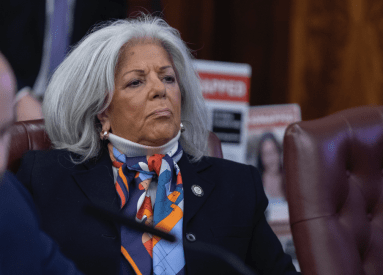
New York’s latest City Council ethics drama over anti-Muslim tweets by a Queens Republican lays bare the tensions between robust speech and the boundaries of public service in a polyglot metropolis.
New York is no stranger to political incivility. But in recent days, the city’s 51-member Council has observed a new spectacle—a formal ethics charge against Councilwoman Vickie Paladino, a Republican representing northeastern Queens, for what the Ethics Committee has labelled “disorderly behavior”. Her offense: a torrent of Islamophobic remarks unleashed on X (formerly Twitter), including a barbed question after the appointment of Faiza N. Ali, a Brooklyn-born, hijab-wearing Muslim, as the city’s chief immigration officer. “New York is under foreign occupation. There’s really no other way to put it,” Paladino wrote, inquiring, “Does this administration have one single actual American in it?”
Her words landed both with predictable outrage and a pointed procedural response. On March 3rd, the Council’s Committee on Rules, Privileges, Elections, Standards, and Ethics charged Paladino with violating its Anti-Harassment and Discrimination Policy—an unusually high-profile application of rules more often used to address internal squabbles or off-colour remarks in council chambers. Now, Paladino faces disciplinary consequences ranging from censure and loss of privileges to suspension or, in an outcome few expect, expulsion.
The consequences transcend one councilwoman’s future. New York’s political class faces a perennial conundrum: how to protect the freewheeling speech so integral to local democracy, while checking behaviour deemed antithetical to a city with more foreign-born residents—approximately 36% of 8.3m—than any other in America. The fraught balance between untrammelled discourse and communal tolerance has rarely been tested so visibly since the city’s post-9/11 soul-searching.
Paladino, for her part, wasted little time accusing her colleagues of a “scheme” to “violate [her] first amendment rights” and “shut down political discourse.” Through a spokesperson, she argued the council was “over-extending its HR policy” to punish protected speech outside the cacophony of its chambers. Her supporters reckon the committee’s actions portend a new chapter of ideological policing.
Opponents, meanwhile, contend her remarks cross a bright line. Ali, a natural-born citizen rarely in the news before her appointment, was painted as an outsider simply due to religion and ancestry. The tweets landed amid sharply escalated tensions over U.S. support for Israel, swelling anti-Muslim sentiment, and fresh anxieties for New York’s sizable Muslim community.
At the heart lies a microcosm of metropolitan identity politics. Paladino represents Whitestone, Bayside and adjacent Queens precincts, fast gentrifying but hardly a stronghold for any single ethnic group. The city council, overwhelmingly Democratic, has of late showcased its diversity as a badge of honour. Yet, as this episode shows, diversity alone does not guarantee harmony.
The disciplinary mechanism, for all its bluster, is mostly symbolic. Any punishment harsher than censure or a token fine would require the assent of two-thirds of the full Council—an outcome as rare as a quiet summer weekend at Rockaway Beach. Most likely, Paladino faces public scolding, perhaps mandatory training, and months of political grist for both populists and progressives eager to claim victimhood or virtue.
A familiar clash between speech and service
This is not a uniquely New York phenomenon. On Capitol Hill, Congress has censured or even expelled members for insalubrious conduct or intemperate speech with varying effect (see: the censure of Paul Gosar or the expulsion of George Santos). European legislatures have long prided themselves on fiercely free debate, but even there, hate speech laws bite harder. In London, a council member mouthing such sentiments might well face stiffer penalties, both legal and electoral.
For the city, the affair is more than a tempest in an X feed. It casts awkward light on the fragility and limits of the city’s tolerance. Eight months into a year roiled by protests, budget squeezes and a tin-eared mayoralty, the council’s handling of Paladino’s tweets may set a precedent—however minor—for responding to bigotry cloaked as mixed metaphors about “foreign occupation”.
At stake is not simply Paladino’s career but the city’s sense of itself. New York, polyglot and noisy, is lauded for its pluralism, yet the mechanisms of official decorum must still accommodate vigorous dissent. Historically, the political establishment has preferred to let fools have their say, trusting voters to mete out consequences. The formal rebuke now leveled at Paladino signals a shift—perhaps temporary, perhaps lasting—towards more actively policing its own.
There are, as ever, risks. Formal sanctions for speech, however noxious, can edge into territory best left to heated debate or the ballot box. Where the line between disorderly conduct and protected oratory lies is far from self-evident, especially in a body in which bluster and bombast are, on some days, the coin of the realm.
New Yorkers themselves may prove more phlegmatic than their elected officials. In ordinary times, most would be hard pressed to name their local council member, let alone recount their latest verbal infraction. Yet episodes such as these seed narratives useful to all sides: for the right, evidence of embattled free speech; for the left, proof that dog-whistle politics still lurk beneath the city’s cosmopolitan veneer.
As the city council’s committee weighs its options, it may do well to remember that the cure for bigotry is more often sunlight than censure. The spectacle—well-publicised and largely performative—may assuage the sensibilities of offended constituents, but is unlikely to change minds.
Still, symbols have power. How New York charts the course between unchecked vitriol and excessive sanction will shape the tone and tenor of its public discourse long after the hashtags have faded. Balancing the rights of contrarians against the dignity of a city of immigrants is no easy task, nor is it ever really finished. For now, the pallid machinery of municipal ethics grinds on, offering both a caution and a prompt: in a city defined by argument, how—and when—should one arbitrate its boundaries? ■
Based on reporting from QNS; additional analysis and context by Borough Brief.