Cardi B Joins Mayor Mamdani to Launch Free 2K Childcare and a Jingle Contest
New York’s experiment in free toddler care could reshape city life—and set a precedent for America’s children.
Few things distress New York’s ambitious parents more than the city’s punishing childcare bills. Consider the mathematics: annual costs for daycare in the five boroughs now average $20,000 per child—a sum only the most flush can afford without sacrifice. For countless working families, the price rivals college tuition, shaping decisions about careers, neighborhoods, and even whether to stay in the city at all.
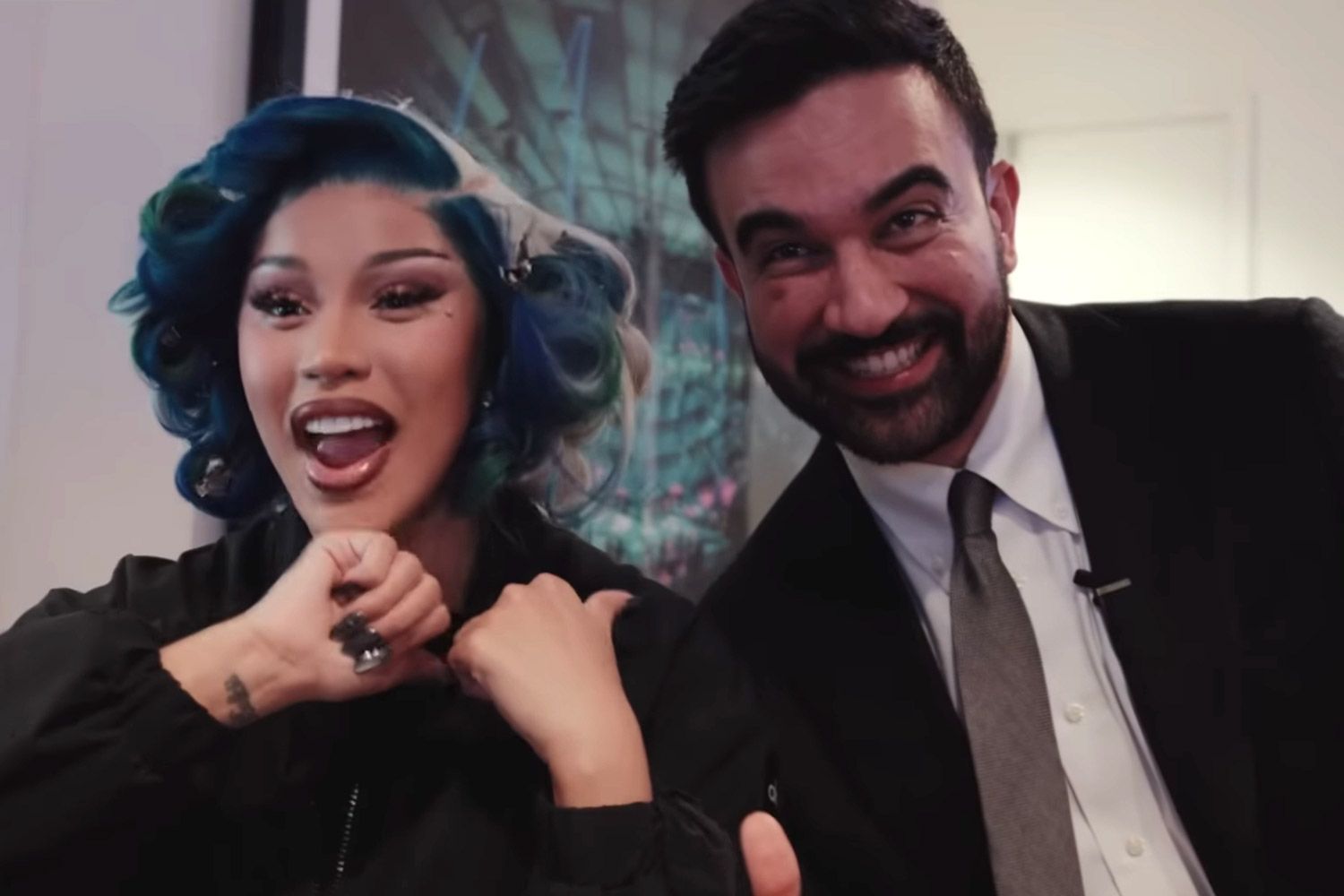
This spring, in a merger of celebrity appeal and municipal intent, Cardi B—she of Bronx roots, global hits, and unfiltered candour—joined Mayor Zohran Mamdani’s launch of “2-K”, a program offering free care for two-year-olds in select city districts. In a sprightly video, the rapper delivered remarks that cut through the bureaucracy: “El cuidado infantil es muy importante. A veces, nosotras las mujeres no podemos realmente avanzar porque no tenemos a nadie que nos ayude a cuidar de nuestros hijos.” For those uninitiated in Spanish, the message is clear enough: childcare is the linchpin for progress.
Starting this June, 2,000 lucky children across five school districts—targeted in Manhattan, the Bronx, Brooklyn and Queens—will be eligible for a gratis preschool experience. Parents can apply between June 2nd and 26th, with notifications arriving in August. While the programme’s initial scale is modest, the city hall’s rhetoric is anything but: the aim, Mayor Mamdani claims, is to reverse an exodus of young families by making childcare not a privilege, but a right.
Nor is this a sterile policy roll-out. In a flourish calculated to attract attention—and perhaps a few earworm jingles—the city has announced a contest. Residents are invited to compose tuneful, family-friendly 15- to 30-second numbers, preferably bilingual, with Cardi B herself on the judging panel. The winning ditty will become the musical signature of 2-K’s communications campaign, a dash of civic engagement as only New York can serve.
The city’s hopes, clearly, run deeper than publicity. Should the pilot succeed—and assuming it scales citywide by 2027 as planned—it would not only take some financial sting out of urban parenthood, but might recalibrate the cultural calculus that underpins New York’s demographics. Over the past decade, young families have departed for suburban pastures, many citing sky-high care costs as the final straw. This, in turn, has left city classrooms with shrinking rolls and neighbourhoods bereft of playground chatter.
The implications are more than parental convenience. Economically, broad access to early care enables parents—mothers in particular, as Cardi B’s pointed remarks underscore—to join or rejoin the workforce sooner. The city’s vital signs would likely improve: higher labour-force participation, increased tax revenues, and a modest dampening of gender disparities in earnings. The lower burden could also buttress economic diversity, allowing less affluent families to remain and thrive.
Yet the second-order effects remain trickier to predict. With only 2,000 slots in this first tranche, the risk of rationing looms; if demand outstrips supply (as it surely will), disappointment and grumbling are inevitable. Expanding the scheme citywide by 2027 will entail daunting logistical feats. The city must find teachers, spaces, and reliable funding—all without cannibalising resources from other struggling departments. Critics, always numerous, will ask: Should Gotham shell out for early education when subways lurch and housing is perpetually in crisis? On such tradeoffs, New Yorkers perennially disagree.
From Paris to Peoria: the global fight for affordable care
Internationally, New York’s 2-K experiment slots into a growing policy movement. France’s universal crèches and Scandinavia’s socialised preschool are held up as models; closer to home, Washington, DC boasts free pre-K for three- and four-year-olds, which data suggest has helped more parents (especially women) work. But the United States as a whole lags. Federal efforts to expand subsidised childcare have repeatedly stalled, held hostage to budgetary squabbles and ideological divides. For all the talk of family values, America spends barely 0.2% of its GDP on early care, a puny figure when compared with its richer peers.
New York, never shy about self-promotion, would dearly love to join the vanguard. The city’s sprawling bureaucracy does not always excel at nimble programme delivery, but there is precedent: its 2014 expansion of free universal pre-K for four-year-olds is widely reckoned a success. Demand boomed, and participation rates for lower-income and minority children soared. If “2-K” delivers similar returns, New York would once again serve as a proof-of-concept for policymakers from Peoria to Portland.
Still, we are reminded (not for the first time) that well-intentioned social schemes can flounder if the hard arithmetic is neglected. Public sector unions, zoning laws, and the city’s Byzantine contracting processes are capable of thwarting the bravest mayoral ambitions. The spectre of underfunded rollouts and haphazard quality control cannot be waved away by even the sprightliest of Cardi B jingles.
Yet pessimism, in this case, may be as unwarranted as undue boosterism. New York’s great trick has always been to patchwork its unwieldiness into vitality. Trials of social innovation, sometimes bodged, sometimes brilliant, almost always injected with brio and the irrepressible energy of a city that refuses to choose between having children and having a life.
If 2-K can help more New Yorkers raise families while remaining in the city—without mortgaging their futures for the privilege—it will be an experiment worth watching, and perhaps emulating. As ever with municipal policy, the details will decide whether the melody soars or falls flat. ■
Based on reporting from El Diario NY; additional analysis and context by Borough Brief.