Amazon Delivery Violations Outpace City Enforcement, Teamsters Argue System Needs Overhaul
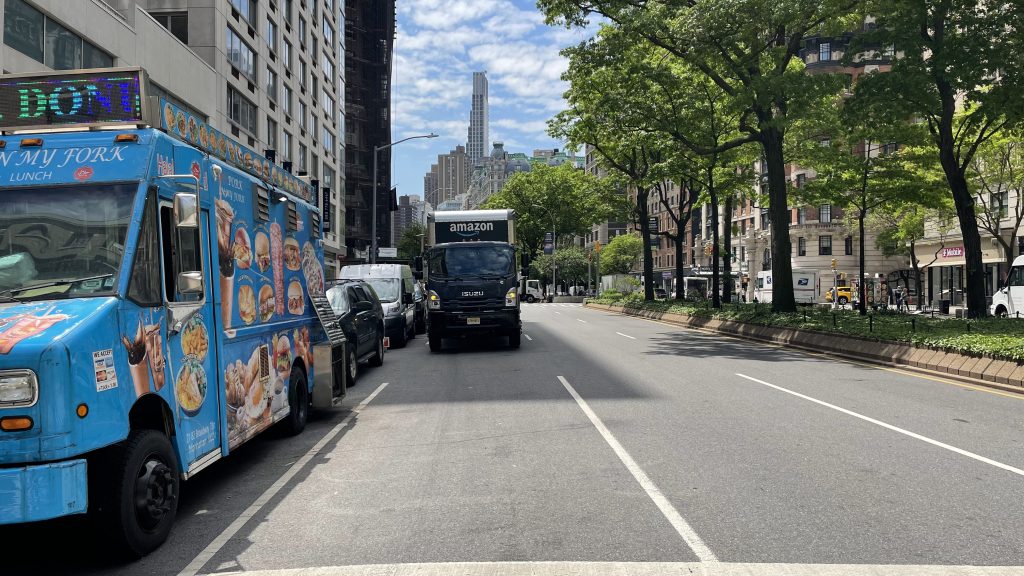
The surge of last-mile delivery in New York City has outpaced the city’s ability to curb the resulting safety risks, raising awkward questions about how urban streets and gig workers bear the cost of e-commerce convenience.
A bucket of ice water greets anyone who delves into the data on Amazon’s New York City delivery fleet. Teamsters Local 804, representing many city delivery drivers, alleges that just 1,553 Amazon-linked vehicles racked up over 5,700 parking citations between 2021 and 2025. These are but the visible tip of a bulkier iceberg: since enforcement rates for such violations hover between 2.87% and 11.2%, the true tally may run to 90,000 or even 330,000 breaches in four years. The pattern, the union contends, signals not only widespread flouting of regulations—blocking hydrants, bike lanes and sidewalks—but a city caught flat-footed as commerce migrates from storefronts to stoops.
The Teamsters’ new report landed this week with a thud. It contends that delivery firms, led by Amazon, now shape street life in ways both mundane and hazardous—prompting higher injury rates for cyclists, pedestrians and drivers near last-mile warehouse zones. Quotas dictated by algorithms, high driver churn and indirect employment models, the union claims, combine to endanger workers and the public alike. The Teamsters urge the City Council to act by passing the Delivery Protection Act, which would tighten standards across the industry.
Amazon has dismissed the union’s data as “flawed” and “selective,” pointing out that over 40 independent Delivery Service Partners (DSPs) manage their own drivers, staffing and practices. Safety, Amazon claims, is central to its model. Yet, critics argue that the tech giant’s subcontracting approach sidesteps accountability, letting street-level issues fester while HQ claims plausible deniability.
New York’s appetite for free shipping and anything-now speed helps explain the regulatory gap. More than a third of all city household deliveries—a multi-billion-dollar market—now arrive via third-party drivers, most non-unionized and many with tenuous job security. For Amazon, whose warehouse footprint has ballooned, this last-mile architecture makes strategic sense. For the city’s 2,155 traffic enforcement agents, however, it presents an unenviable arithmetic: with roughly 4,100 citations issued per agent per year, enforcement can hardly keep pace if 97% of violations slip through the net.
The implications are hardly academic. “We fully expect Amazon to deflect and deny responsibility for the damage it’s inflicting upon millions of New Yorkers, but facts don’t lie,” said Vincent Perrone, president of Local 804. In practical terms, blocked hydrants and bike lanes imperil emergency response and hamstring the city’s modest progress on Vision Zero traffic-safety goals. Injury clusters near “delivery deserts”—warehouse-dense districts in the Bronx, Queens, and Brooklyn—highlight the discord between urban design aspirations and algorithmic business models.
Second-order effects ripple further. Warehousing and delivery jobs skew toward lower wages and shaky benefits. The DSP model, critics say, can encourage labor practices that would not pass muster if Amazon were the actual employer. Like Uber and other platform firms, Amazon benefits from a regulatory ambiguity that leaves drivers responsible for vehicle costs, Kafkaesque time constraints, and, it appears, a share of the liability for legal infractions.
Nor are such contests unique to Gotham. Across American cities—Chicago, Los Angeles, Philadelphia—last-mile delivery companies have provoked both municipal headaches and worker unrest. National regulators lag the technological realities: the Fair Labor Standards Act has yet to encompass most gig drivers, and neither the Department of Labor nor OSHA has made meaningful inroads on sector-wide safety. European metropolises, typically less car-centric, have faced similar issues but tend to act more aggressively—London deploys camera-based ticketing, Berlin caps delivery van access near schools. New York, for all its bureaucratic heft, presents a studied ambivalence.
Progress by enforcement alone falls short, leaving city lawmakers and Amazon’s critics searching for more forceful remedies.
Debates over the Delivery Protection Act—backed by labor and transit advocates—now swirl in City Hall. Proposals on the table include requiring delivery firms to directly employ drivers, capping daily route volumes, and tripling base fines for repeat violators. Yet, the city’s regulatory past is littered with tepid, easily evaded rules. A “double-parking” surcharge on e-commerce firms, floated in the City Council last January, faded without a vote after industry lobbying.
Meanwhile, Amazon’s model remains both efficient and opaque. Delivery volumes and market share continue to swell, offering tangible convenience for residents but testing the patience of neighbors and the limits of New York’s street grid. Even with incremental reforms—more bike lanes, added enforcement, occasional PR outbursts about “shared responsibility”—the system seems designed to offload costs onto the public, while private profits mount.
Optimists in the business community warn against strangling innovation in regulatory red tape. Consumers, after all, remain addicted to rapid delivery—a habit that, for now, the likes of Amazon feed with singular aplomb. Yet, laissez faire is proving increasingly unsustainable. The data, however imprecise, suggest a need for rebalancing: whether through stiffer mandates, or through coordinated reforms at the local, state, and federal level.
In this, New York finds itself at a crossroads—between the promise of e-commerce and the peril of city streets becoming de facto truck depots. For a city that prizes both dynamism and walkability, the challenge is not trivial. Few urban riddles are solved by ticketing alone; fewer still by blaming algorithms. The next mayoral administration, and council, would do well to muster the political will that the city’s traffic agents—and the public—clearly lack the tools to achieve alone.
What is clear is that the winners of the last-mile boom have so far paid only a paltry portion of its wider social and infrastructural costs. Shifting that balance, and creating a more equitable playing field for workers and residents alike, will demand more than spreadsheets and press releases. For both City Hall and Amazon, the bill is coming due. ■
Based on reporting from Streetsblog New York City; additional analysis and context by Borough Brief.