Albany Floats New Taxes on Wealthy to Fund Child Care and Keep Workers Here
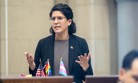
As New York’s working families wrangle with rising costs, calls to overhaul the state’s tax system invite both hope and hard questions about who should pay for the city’s future.
New Yorkers are adept at coping with sticker shock, but even inured Gothamites now wince at the latest numbers. Median rent in Manhattan climbed to an unprecedented $4,250 this spring, a sum nearly double the national average. Utility bills have spiked, grocery prices remain obstinate, and child care for one infant can gouge an eye-watering $22,000 per year—enough to daunt even the ambitious and resilient middle class.
A fresh salvo in the perennial war over taxes now comes from progressive lawmakers in Albany. Assembly Member Gabriella Romero, echoing a groundswell of local discontent, insists that the “ultra-wealthy and largest corporations”—long the prime targets in such debates—are not carrying their load. Citing the effects of recent federal tax changes and persistent loopholes, she contends that working families are being left behind, while fortunes at the top compound untroubled.
The policy proposals that Ms. Romero and her allies support are straightforward. They want to raise more than $32 billion annually by crafting new tax brackets for millionaires and billionaires, hiking corporate levies, and closing loopholes. Their stated objective is to fully fund social services, chiefly universal child care, affordable housing, Medicaid, and food assistance—the scaffolding of what some envision as a more equitable New York.
New York, already one of the most progressive tax states in America, occupies a peculiar position. Its top marginal income-tax rate sits at 10.9%, surpassed only by California and New Jersey, yet state receipts have lagged behind ballooning expenditures. Advocates argue the state has plenty of dry powder if only it is willing to aim higher: the Fiscal Policy Institute claims the proposed measures could underwrite a new wave of social investments that might stanch, or even reverse, troubling signs of urban decline.
Yet caution remains warranted. Empirical work by everyone from the Empire Center to the US Census Bureau finds population losses most pronounced among working- and middle-class New Yorkers, rather than wealthy denizens decamping for Florida or Texas. Nevertheless, it would be folly to assume that billionaires are altogether indifferent to tax rates. The ultra-rich may value New York’s dynamism, but newer fortunes are global and mobile, while accountants with nimble fingers can move assets at the tap of a keyboard.
In this light, the case for hiking taxes turns on more than populist sentiment. Supporters reckon it redresses systemic imbalances, enabling lower-income New Yorkers to gain access to services that improve social mobility and long-term economic dynamism. Yet opponents point to the tightrope the city and state already walk: raise rates recklessly, and the local tax base may prove less permanent than official bulletins suggest.
Comparisons and the real risk: Losing talent, not tycoons
The backdrop is a tale familiar to metropolises from San Francisco to London. Cities hungry for growth must strike a precarious balance: invest in the infrastructure and services that entice and retain an ambitious workforce, but avoid squeezing out the high earners whose contributions fund public ambitions. New York’s own experience during the pandemic years offers a cautionary tale—while it has largely weathered predictions of exodus among the ultra-wealthy, it has lost tens of thousands of ordinary taxpayers, many of whom fled for places with a lighter touch on their wallets.
Nationally, the tax debate is shifting. President Trump’s “Big Beautiful Bill,” as detractors deride the Tax Cuts and Jobs Act, sharply curtailed federal deductions for state and local taxes (SALT), a move with outsized consequences for high-tax states like New York. The resulting federal-state mismatch has rendered the city and surrounding areas less fiscally flexible, even as demand for progressive policy surges.
Globally, the contours of the debate look much the same. Scandinavian countries, often lauded for their tax-financed social arrangements, have tax systems that are broader and less punitive on income at the margin; they tend to rely more on consumption and wealth taxes alongside income tax. New York, by contrast, tries to do more with fewer tools, leaning heavily on a relatively narrow, high-earning cohort.
As ever, the ultimate question is not whether New York should be ambitious in its societal investments, but how those ambitions can be bankrolled sustainably. Politicians evangelising for higher rates assure us the rich will not vanish. Economists with longer memories urge caution, citing the city’s own brush with bankruptcy in the 1970s, precipitated at least in part by a withering tax base and too-rosy revenue forecasts.
The case for universal child care and affordable housing in New York seems compelling—up to a point. Few dispute the benefits of easing working families’ burdens and reducing the risks of child poverty or displacement. But if the city and state lean too heavily on a single, elite stratum, they risk constructing a fiscal edifice both unsteady and unattractive, especially if neighbouring states offer softer landings for footloose employers and workers.
A surer approach—though less politically intoxicating—would be to broaden the tax base smartly, scrutinise spending priorities, and pursue incremental reforms. Modernising property taxes, plugging leaks in procurement and administration, and rethinking who receives subsidies would yield less dramatic headlines but perhaps more resilient finances.
For all the hand-wringing over “historic tax advantages” enjoyed by the one percent, the greatest threat to New York’s future may be ordinary families packing up for cheaper states, enticed by work-from-anywhere options and better value. The vision of a city both fair and functional remains elusive; no simple tax tweak will deliver it overnight.
New York’s penchant for progress often serves it well, but zeal alone does not close budget gaps or banish inequality. To build a stronger, more durable city, leaders must resist the lure of easy answers and instead navigate an ever-shifting terrain with care and realism. Only then is there hope that a fairer system will foster both opportunity and stability, rather than trading one for the other. ■
Based on reporting from City & State New York - All Content; additional analysis and context by Borough Brief.